
Tongue Tie Treatment in Utah
At the TMJ & Sleep Therapy Centre of Utah, we provide comprehensive evaluations for children and adults experiencing symptoms related to tongue restriction. Whether you are searching for a tongue tie dentist near you or looking for answers regarding tongue tie and TMJ dysfunction, our team focuses on identifying how oral restrictions may be impacting overall airway health and oral development.

What Is Tongue Tie?
Tongue tie (ankyloglossia) occurs when a restricted lingual frenulum limits normal tongue mobility, potentially affecting feeding, speech, and airway development in children. Beyond infancy, restricted tongue function has been associated with altered oral posture and compromised airway space. A systematic review in the National Library of Medicine highlights the broader functional implications of untreated tongue tie.
From an airway and sleep perspective, adequate tongue mobility is essential for maintaining proper oral and pharyngeal posture. Research in the Sleep Medicine Reviews journal underscores this relationship, noting:
“Restricted tongue mobility may contribute to oropharyngeal airway narrowing and sleep-disordered breathing.”
Call today to schedule a tongue tie evaluation.
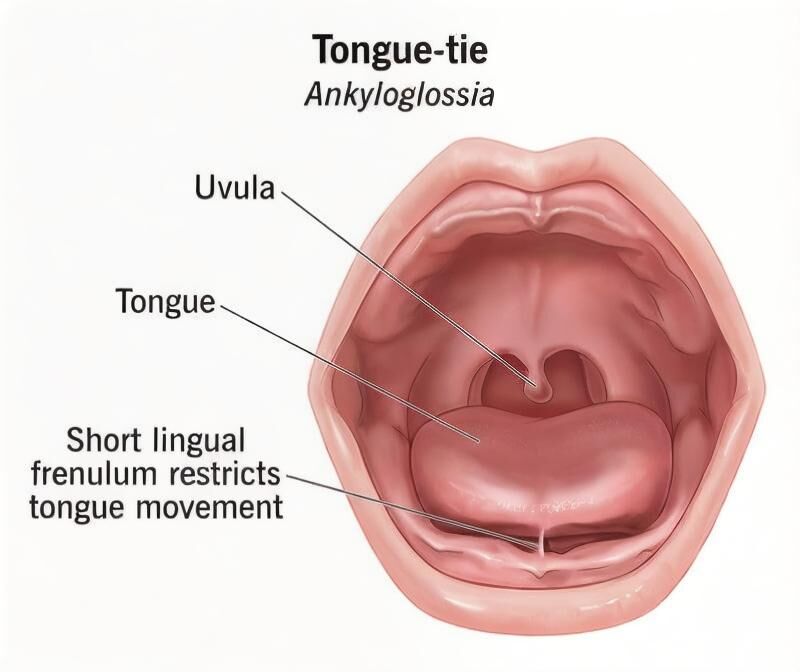
How Tongue Tie and TMJ Dysfunction May Be Connected
For some patients, tongue tie and TMJ dysfunction may be connected through:
- Chronic jaw tension or clenching
- Improper swallowing patterns
- Mouth breathing and airway restriction
- Muscle imbalance throughout the face and neck
- Limited tongue posture against the palate
- Increased strain on jaw joints and facial muscles
Over time, these compensations may contribute to symptoms such as jaw discomfort, headaches, facial tension, poor sleep quality, and TMJ-related pain.
Goals Of Tongue Tie Treatment
Improve Feeding & Swallowing Function
Support Clear Speech & Oral Coordination
Encourage Proper Nasal Breathing
Promote Healthy Jaw & TMJ Development
Why Choose Us For Tongue Tie Treatment?

Comprehensive Tongue Tie & TMJ Evaluation
Tongue tie is often overlooked or treated as an isolated issue without fully evaluating how tongue restriction may affect airway health, jaw development, facial muscles, and TMJ function. At our clinic, we take a more comprehensive approach by assessing how oral restrictions interact with breathing patterns, muscle coordination, swallowing function, and overall oral development.
Rather than focusing only on short-term symptom relief, we emphasize personalized evaluations and evidence-based treatment planning designed to support long-term function and comfort. This whole-function approach helps patients better understand the relationship between tongue mobility, airway health, and TMJ-related symptoms.

Our Patient-Focused Approach
Our team provides individualized care plans tailored to each patient’s symptoms, age, and functional needs. Depending on the findings of your evaluation, treatment recommendations may include collaborative therapy approaches, oral function assessments, airway-focused evaluations, and guidance designed to improve tongue mobility and reduce muscular compensation patterns.
By addressing the functional impact of tongue restrictions early, patients may experience improvements in oral comfort, breathing patterns, jaw tension, sleep quality, and overall quality of life.
Frequently Asked Questions About Tongue Tie
Q: How do I know if my child has tongue tie?
Q: Is tongue tie painful for babies or kids?
Q: Will my child need speech therapy?
Q: Can tongue tie affect sleep?
Q: What happens if tongue tie is left untreated?