
Not usually. It works alongside a night appliance or laser therapy rather than instead of it. The exercises address the muscle habits driving the joint's workload, so many patients find their other treatments hold better once those habits change.
TMJ Therapy • Myofunctional Therapy
Myofunctional Therapy for TMJ Pain
When the tongue rests low and the jaw muscles overwork, the joint pays for it. Myofunctional therapy retrains tongue posture, breathing and swallowing so the muscles around the jaw can finally relax — no appliance, no surgery.

TMJ & Myofunctional Therapy
How Muscle Habits Load the Jaw Joint
When the tongue rests low, breathing runs through the mouth, or a swallow pushes against the teeth, the jaw muscles pick up the slack and stay tense all day. That constant load can keep a TMJ joint irritated even after an appliance or laser session. Myofunctional therapy retrains those habits with guided exercises, easing the load so the joint gets a chance to rest. Learn more about myofunctional therapy and who it helps.
How It Works
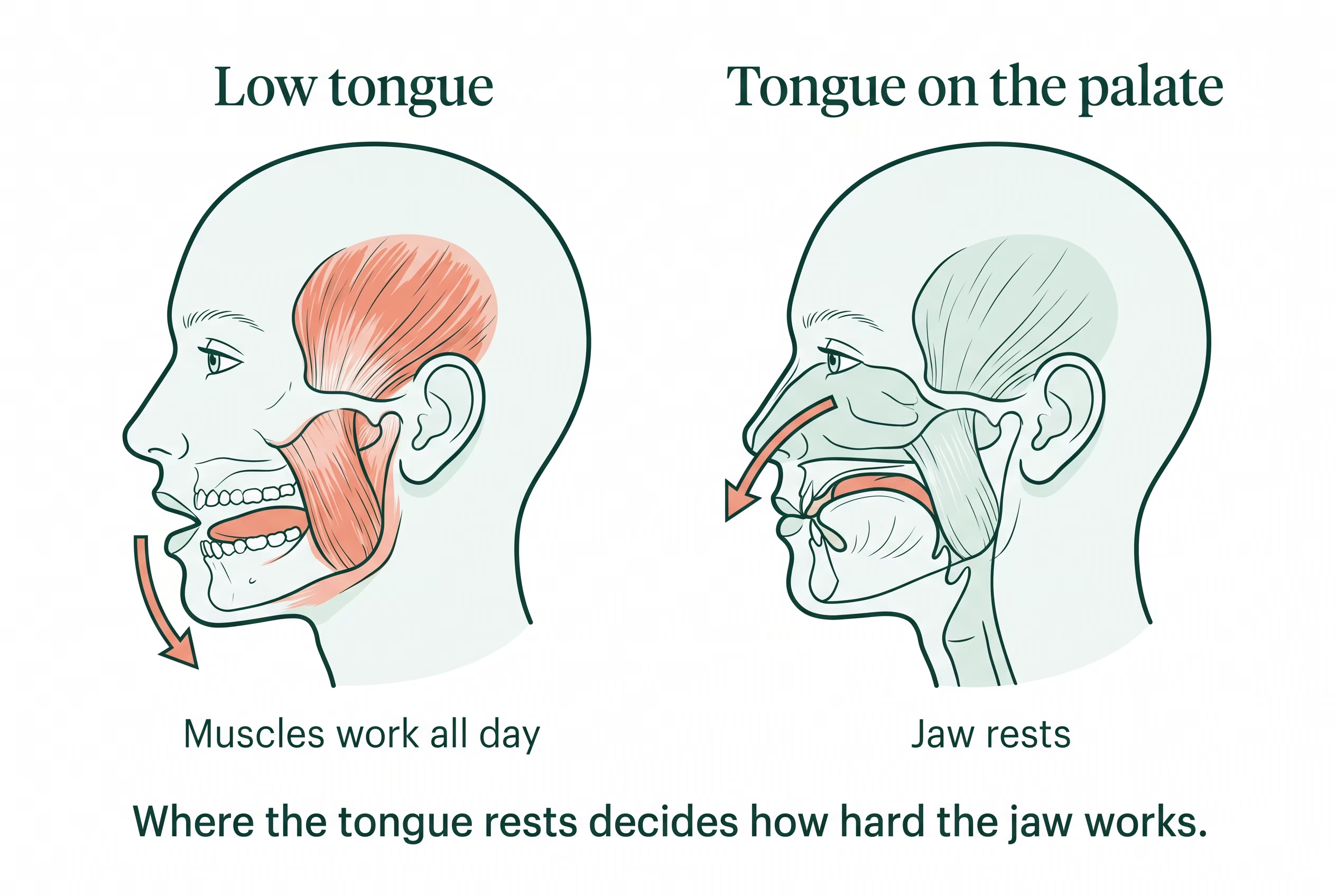
Tongue posture sets the jaw's workload
Where the tongue rests affects how hard the jaw muscles have to work.
Myofunctional Therapy for TMJ
Who It Helps • What to Expect
Is This Right for You?
Myofunctional therapy helps when a muscle habit, not just the joint itself, is keeping TMJ symptoms going. It is worth a look if any of these sound familiar.
Signs it will help
- Clenching that builds through the day
- Jaw ache that worsens by afternoon
- Clicking or popping when you chew
- Tongue scalloping along the sides
- Breathing through the mouth
Also common: headaches, neck tension, sleep that does not refresh.

What a Program Looks Like
Therapy is a set of guided exercises built around your case, paired with a short daily routine at home.
The exercises
- Jaw relaxation — to reduce muscle tension
- Tongue positioning — to support jaw alignment
- Breathing retraining — to reduce stress clenching
- Habit modification — to remove what aggravates the joint
Timeline: weekly sessions, ten minutes of daily practice, most people notice change in a few weeks.
Who This Helps
Conditions This Helps With
Ready When You Are
Retrain the Muscles, Ease the Load on the Joint
Myofunctional therapy pairs with our appliance and laser options, and for many patients supports better results from both. Call (385) 446-4947 to book a TMJ evaluation and find out whether therapy belongs in your plan.
Call (385) 446-4947Call Now
Common Questions
Frequently Asked Questions About Myofunctional Therapy for TMJ Pain
Most people notice some change within a few weeks of weekly sessions and daily home practice. How quickly depends on how long the habits have been in place and how consistently the exercises are practiced at home.
Recurring pain often points back to an untreated habit — a low tongue rest posture, mouth breathing, or a clenching pattern. At your evaluation we will look at whether myofunctional therapy should be added to your plan.
No. You can request an evaluation directly, and we will assess your jaw, tongue posture and breathing together to see whether therapy fits your case.
No. The exercises are gentle and build new patterns gradually rather than forcing muscles into position. Most patients describe the sessions as easy, with mild muscle awareness afterward rather than pain.