
Myofunctional therapy for TMD focuses on strengthening the muscles around the jaw with the aim of reducing tension, supporting alignment, and reducing clenching and grinding. By correcting oral posture and function, it can help support relief from jaw joint (TMD) pain.
Myofunctional Therapy — Payson, Utah
Myofunctional Therapy
Exercise-based therapy retraining the muscles of the face, mouth and tongue so breathing, chewing, swallowing and speaking work the way they should.

Exercise-Based Care
What Is Myofunctional Therapy?
Myofunctional therapy is an exercise-based treatment that focuses on retraining the muscles of the face, mouth, and tongue to function optimally. By addressing orofacial myofunctional disorders (OMDs), this therapy aims to improve essential functions such as breathing, chewing, swallowing, and speaking.
It suits all ages and is often paired with other care. You may also see it written as myo functional therapy — it is the same thing. Swallowing patterns are often the problem; when a restriction limits the tongue itself we also treat tongue tie and lip tie.
Explore By Need
Myofunctional Therapy, By Angle
The exercises share the same foundation — how they help depends on what you are treating.
Myofunctional Therapy For TMJ Pain
How retraining the tongue and facial muscles may help take strain off the jaw joint and ease TMD-related pain.
Myofunctional Therapy for Sleep Apnea and Snoring
How strengthening airway muscles and building nasal-breathing habits supports easier, quieter sleep.

Myofunctional Therapy For Children
How addressing oral habits early may help support healthy speech and facial development in growing children.
How Therapy Works
Adults • Children
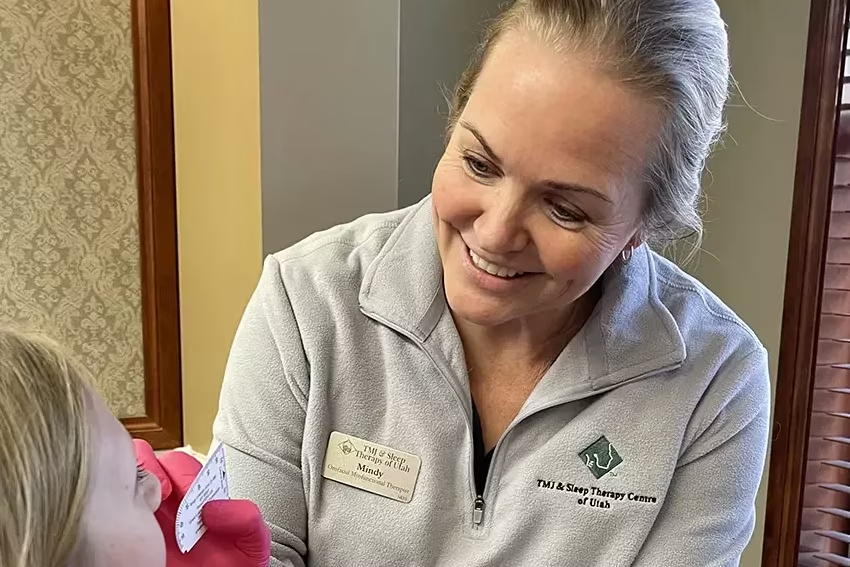
Myofunctional Therapy for Adults
Therapy is a plan of daily exercises, not a device.
What therapy involves
- An assessment of how the facial and oral muscles function
- Daily exercises, 10–15 minutes
- Posture training — tongue on the palate, lips closed
- Habit correction and exercise videos in the patient portal
Signs of an orofacial myofunctional disorder: mouth breathing, tongue thrust when swallowing, open-mouth rest posture, speech articulation problems, snoring or restless sleep, jaw and facial tension.
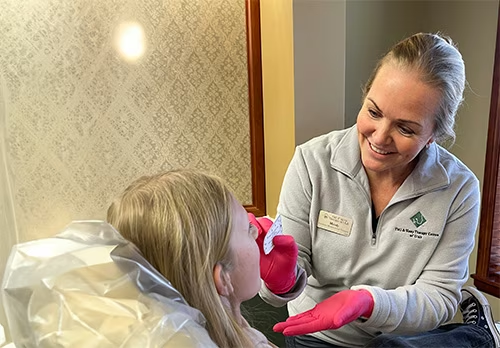
Myofunctional Therapy for Children
Fun, age-appropriate exercises — blowing games, tongue slides, cheek puffing.
What therapy involves
- Correcting thumb-sucking and tongue-thrust habits
- Pairing with Myobrace where growth needs guiding
- Nasal-breathing training
- Tongue-tie screening
Signs in children: mouth breathing, snoring, messy or noisy eating, speech delays, crowded teeth.
How It Works
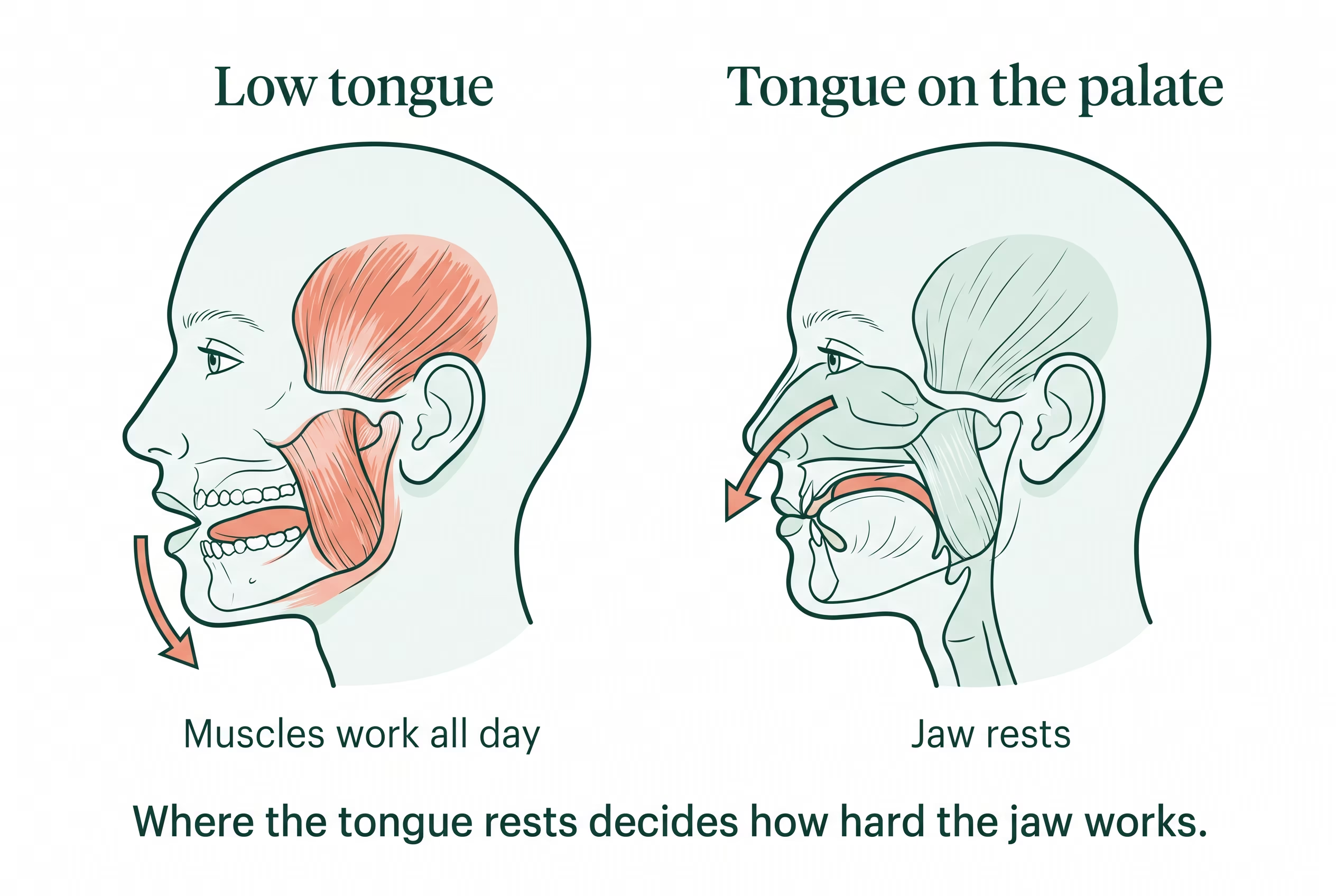
Where the tongue should rest
Tongue posture affects how hard the jaw has to work.
What to Expect
How an evaluation works
Three steps, in order. Nothing is recommended until the first two are done.
Request an evaluation
Tell us what you are experiencing, in your own words. Call, text or send a message and we will arrange a time.
A comprehensive assessment
We examine the jaw, muscles, airway, sleep and oral function together and review your history.
A plan built on the findings
We explain what we found and what is contributing, then recommend care that fits it.
Ready When You Are
Struggling With TMJ Pain, Restless Nights Or Constant Fatigue?
Myofunctional therapy may help with both TMD and sleep-related breathing problems. Request an evaluation or call (385) 446-4947 and we will tell you whether it fits your case.
Common Questions
Frequently Asked Questions About Myofunctional Therapy
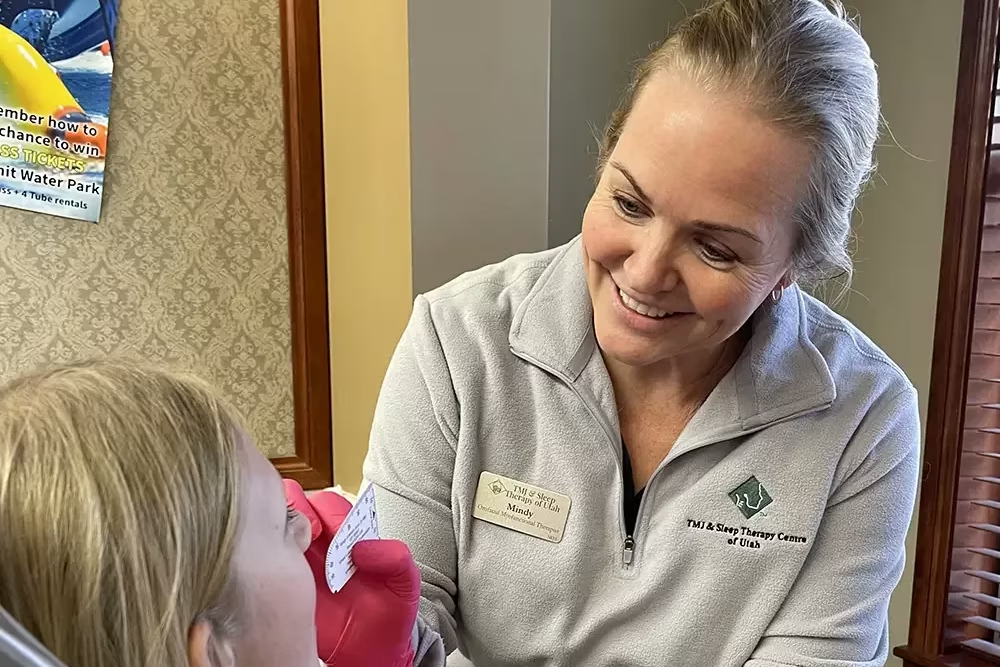
You can get myofunctional therapy from our Payson office at 33 W 300 S #1, Payson, UT 84651. Whatever you searched for (orofacial myofunctional therapy, a myofunctional therapist, myo therapy), it is the same care, delivered alongside our TMD and sleep treatment by a licensed therapist who works with your other health care providers.
A myofunctional therapist assesses the way your facial and oral muscles function and designs a custom plan to correct imbalances. Treatment may involve daily exercises, posture training, and habit correction, often as part of a broader plan addressing TMD or sleep concerns.
Your Myofunctional Therapist
Meet Mindy Lunceford

Myofunctional Therapist, RDH
Mindy Lunceford, RDH
Mindy has practiced as a licensed hygienist since 1997 and added myofunctional therapy in 2020, blending science and care to help kids and adults breathe, swallow and rest better. She assesses how your facial and oral muscles function and builds a plan of daily exercises, posture training and habit correction around what she finds. Current patients can follow their exercise videos between visits in the Myofunctional Therapy Portal.
If You Are Not Sure Yet
Take a symptom assessment
A few minutes of questions to help you describe what you are experiencing. It is not a diagnosis; it gives us somewhere to begin.
Jaw, face or head pain
Jaw pain, headaches, or clicking when you chew may point to a TMJ disorder, or to something that interacts with it.TMJ Symptom Assessment
Snoring, fatigue or broken sleep
Snoring, gasping for air, or waking unrefreshed can be signs of a sleep-related breathing problem.Sleep Symptom Assessment