
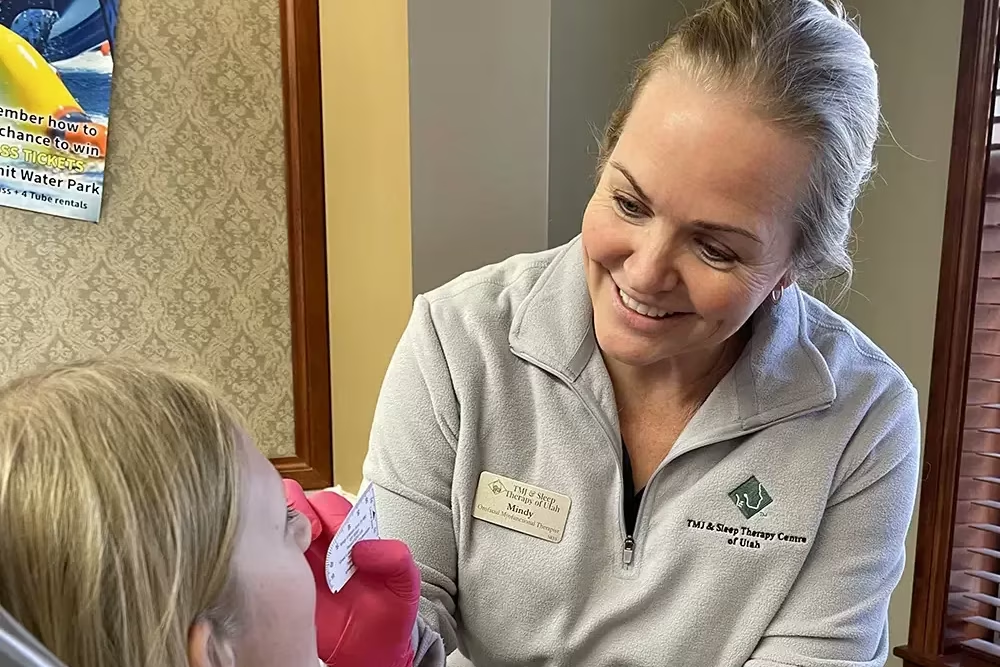
Pediatric myofunctional therapy is a specialized treatment that focuses on improving the function of the tongue, lips, jaw, and facial muscles. It is designed to help children build healthier breathing, swallowing, and oral-posture habits, which can support growth and development.
Children • Development • Myofunctional Therapy
Myofunctional Therapy for Children
Mouth breathing, tongue thrust and thumb sucking can change how a child’s face and airway grow. Gentle, game-like exercises help retrain those habits early, supporting breathing, speech and jaw growth — and often better sleep along with them.
Face Growth & Childhood Habits
Why It Matters in Childhood
A child’s face and airway are still taking shape, and daily habits play a role in how they grow. Mouth breathing, a tongue that rests low instead of on the palate, and thumb sucking past toddlerhood can narrow the palate, crowd the teeth and pull the jaw out of line. Left alone, those habits often show up later as snoring, a lisp or crooked teeth — addressed early, while the bones are still growing, myofunctional therapy may help support a better course. See how it’s different from myofunctional therapy for adults.
How It Works
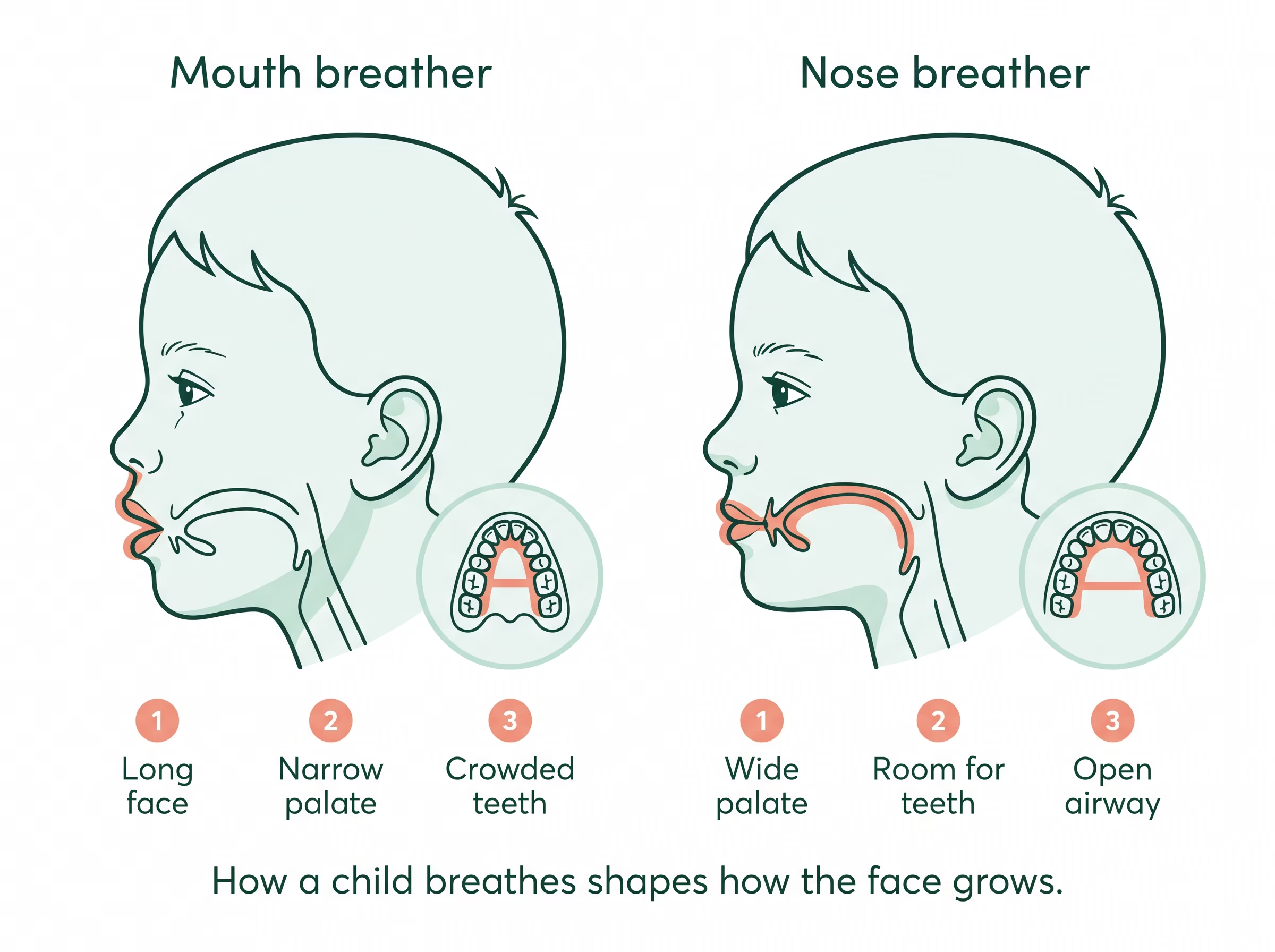
Two Ways a Face Can Grow
How a child breathes is closely linked to how the face grows.
- Mouth breather — long face, narrow palate, crowded teeth.
- Nose breather — wide palate, room for teeth, open airway.
Getting Started
Who It Helps • What to Expect
Signs Worth a Closer Look
Myofunctional therapy is often recommended for children whose everyday habits work against how the face and airway want to grow. These signs and habits are worth raising at an evaluation.
Signs to Watch
- Mouth open at rest
- Snoring or restless sleep
- Bed-wetting past age 6
- Trouble focusing at school
- A lisp or tongue thrust
Habits That Contribute: thumb sucking, nail biting, pacifier use past age 3.

What Changes, Session by Session
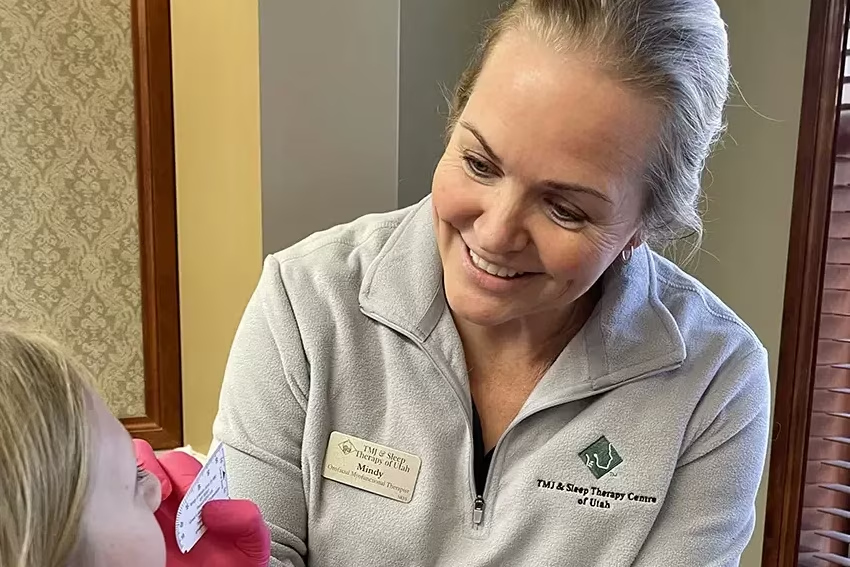
Sessions are short and playful, built around games and mirror work rather than drills. A parent joins in, and a few minutes of daily practice at home carries the habit past the appointment.
In a Session
- 30–40 minutes
- Games and mirror work
- A parent joins in
- Five minutes of daily practice at home
Therapy Goals: nasal breathing over mouth breathing, clearer speech, a more typical swallowing pattern, support for on-track jaw growth, fewer habits like thumb sucking.
Related Care
Conditions This Helps With
Myobrace®
A removable appliance that reinforces these same daily habits.
Tongue-Tie Evaluation
A tight tongue can limit the exercises and posture therapy teaches.
Airway Orthodontics
Widens the palate so a growing airway has more room.
Pediatric Care
See the full range of care built for growing kids.
Ready When You Are
Help Your Child’s Face and Airway Grow Well
If your child mouth breathes, thumb sucks past toddlerhood, or shows a tongue thrust, myofunctional therapy can retrain the habit before it shapes the bite. Call (385) 446-4947 to book a pediatric evaluation.
Common Questions
Frequently Asked Questions About Myofunctional Therapy for Children
Children may benefit from therapy if they experience mouth breathing, tongue thrust, speech challenges, improper swallowing, or issues related to jaw development. Pediatric myofunctional therapy can address these habits early, which may reduce the risk of long-term complications.
Choose a provider experienced in airway-focused, developmental care. TMJ and Sleep Therapy Centre of Utah offers therapy plans designed specifically for children, delivered in Payson.
Therapy typically includes gentle, age-appropriate exercises that train the muscles of the mouth and face. These exercises are designed to be simple and effective, helping children build healthier oral habits over time.
Early intervention is often best. If you notice symptoms such as chronic mouth breathing, snoring, or difficulty with oral habits, scheduling an evaluation can help determine whether pediatric myofunctional therapy is the right next step.