

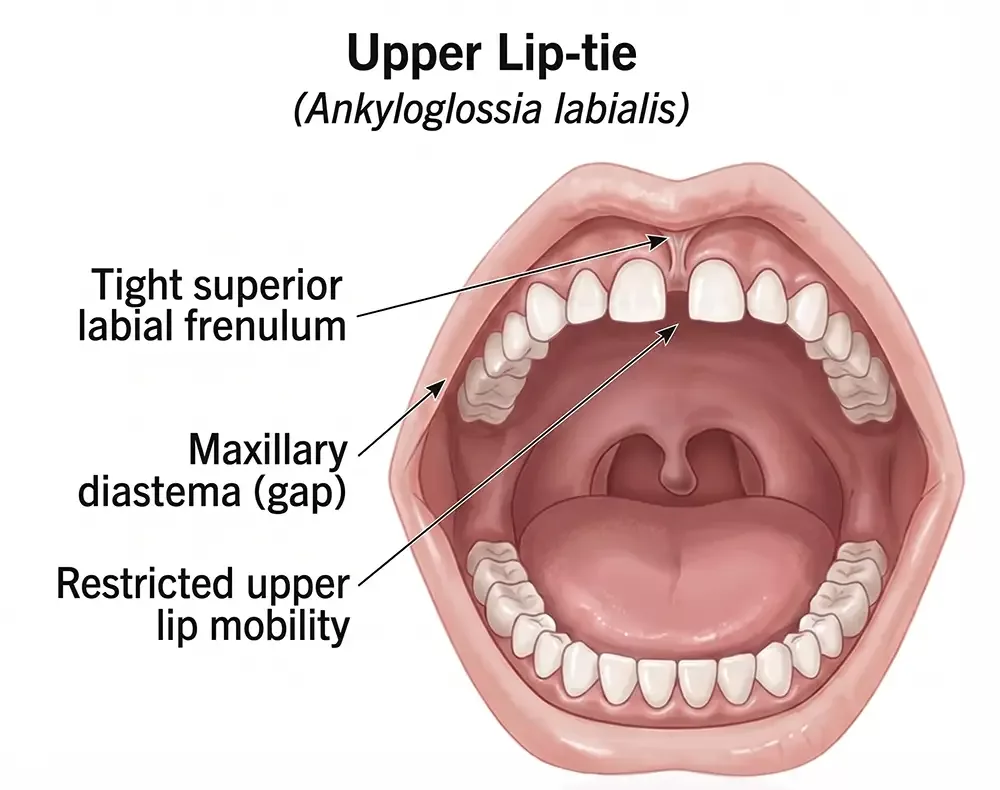
Signs include speech difficulties with sounds like “r” or “l”, trouble with hygiene, eating and swallowing, and a visible gap between the front teeth. An evaluation looks at how the lip actually moves before deciding anything else.
Children & Development • Lip Tie
Lip Tie
A lip tie is a tight or thick band between the upper lip and gum that limits lip movement. It can affect speech, eating and the front teeth — but not every lip tie needs treatment. Evaluation comes first.

Lip Tie Evaluation
What is a Frenulum?
A frenulum is a small fold of tissue that prevents an organ in the body from moving too far. There are several frenula in the mouth that connect the tissues of the cheeks, lips and tongue. A restricted frenulum refers to an abnormal tissue attachment of the lips, cheek or tongue, restricting growth and movement in the areas to which it is attached.
In children and adults a tie can cause speech difficulties — sounds like “r” or “l” — and trouble with hygiene, eating and swallowing.
How It Works
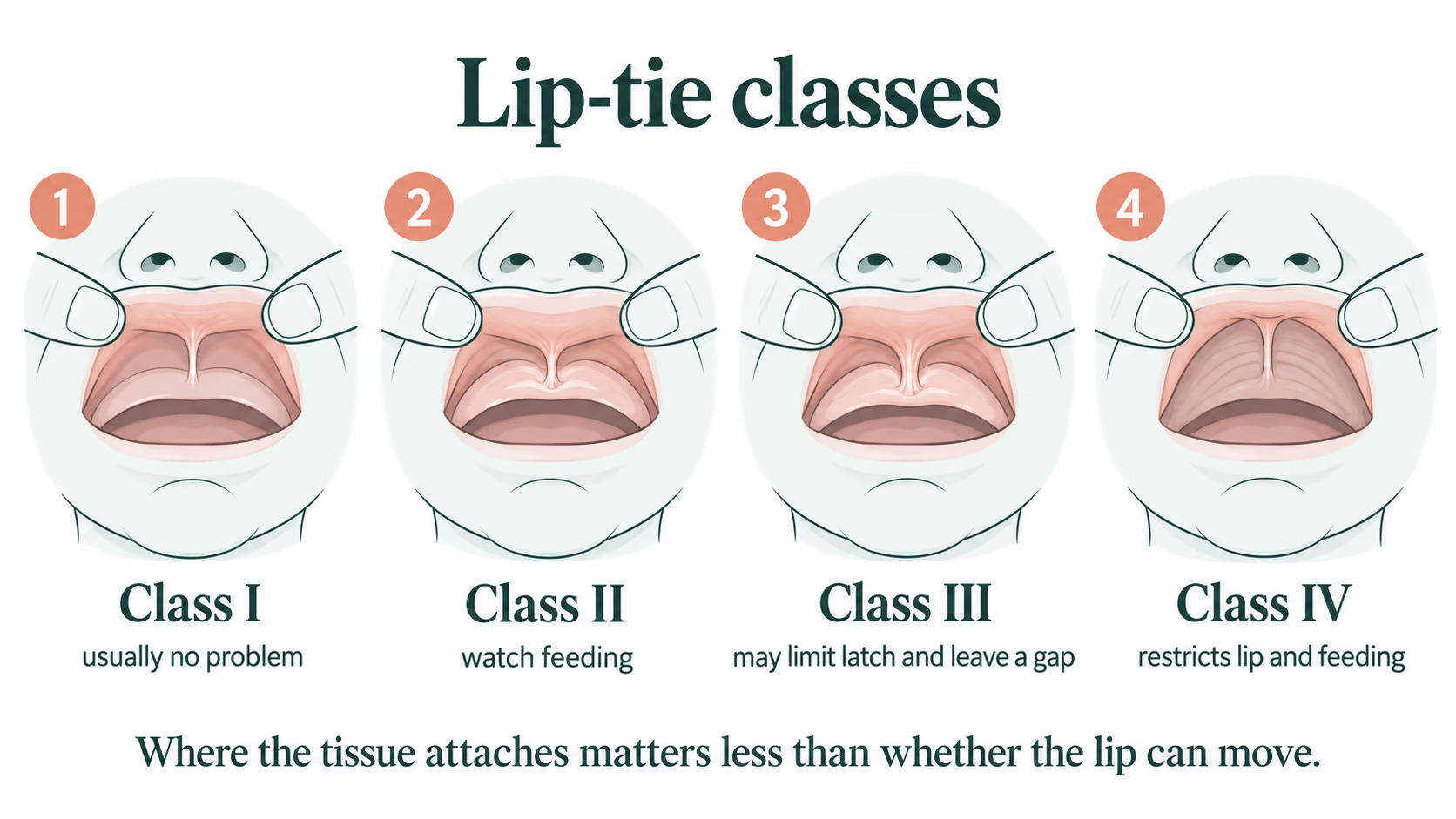
Where the Lip Tissue Attaches
Where the tissue attaches matters less than whether the lip can move.
Lip Function by Age
Children

Children
As teeth come in, a restricted upper lip can show up in the smile and in daily habits.
Signs to watch for
- A gap between the front teeth
- Limited upper-lip movement
- Chronic mouth breathing
- Trouble keeping the area clean
Goal: support normal arch and jaw growth, protect gum health.
Ready When You Are
Book a Lip Tie Evaluation
We look at how the lip and the tissue beneath it actually move, whether it is limiting feeding or function, and only then talk about a release. Call (385) 446-4947 to schedule.
Common Questions
Frequently Asked Questions About Lip Tie
No. A lip tie is only a concern when it limits function — feeding, hygiene or, later, the front teeth. Many lip ties never need a release; the evaluation is what tells the difference.
A frenectomy is less invasive than a filling. A topical anesthetic keeps you or your child comfortable, then the tissue is released, usually with a laser. The laser releases the tight band by removing a small amount of tissue and seals small blood vessels as it works, so most patients have little bleeding and minimal discomfort, and stitches are typically not needed. The visit is quick, and recovery is typically short, though healing varies by patient.
A restricted lip can leave a gap between the front teeth and affect jaw growth over time. That is one of the things we look for at your child’s evaluation.