
Meniere’s disease is an inner-ear condition diagnosed and managed by a physician or ENT. Jaw joint and muscle problems are a separate issue, but the two can occur together, and jaw pain or muscle tension near the ear can add to discomfort in that area. We evaluate for coexisting jaw dysfunction and share our findings with your ENT.
Payson, Utah
Meniere’s Disease
Meniere’s disease is diagnosed and managed by your physician or ENT. When jaw problems are also present, we evaluate and treat them and coordinate with your ENT.

Meniere’s Disease and Jaw Care in Utah
Evaluating the TMJ Connection to Meniere’s Symptoms
Meniere’s disease brings vertigo, ear fullness, tinnitus and hearing loss, and it is diagnosed and managed by a physician or ENT. Some patients with Meniere’s also have jaw joint or jaw muscle problems. As part of our TMJ therapy, we evaluate and treat that coexisting jaw dysfunction and coordinate with your ENT.
Common symptoms associated with Meniere’s disease include:
Vertigo and balance issues
Ear fullness or pressure
Tinnitus (ringing in the ears)
Fluctuating hearing loss
Jaw pain and tightness
What Is Happening
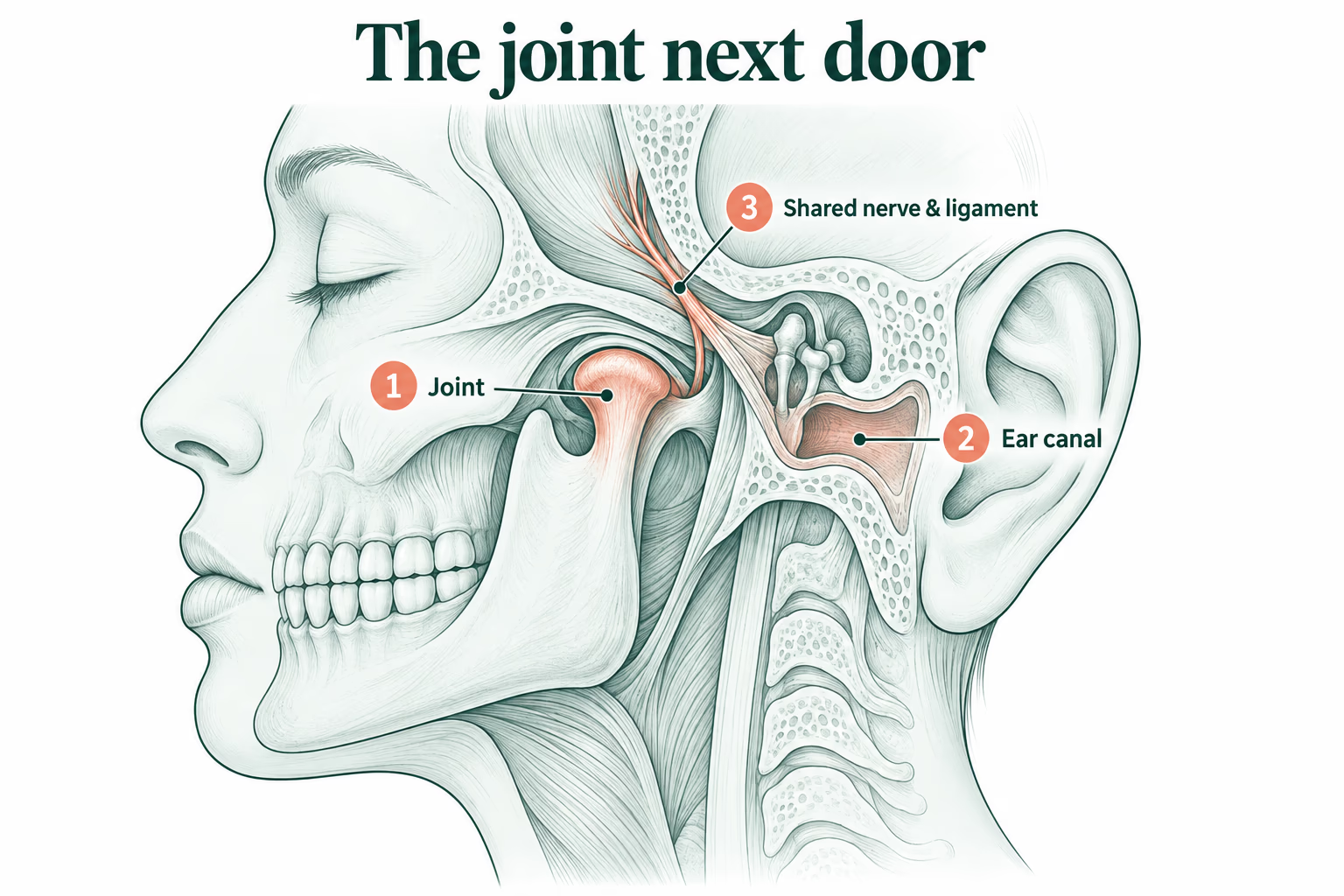
The jaw joint sits beside the ear
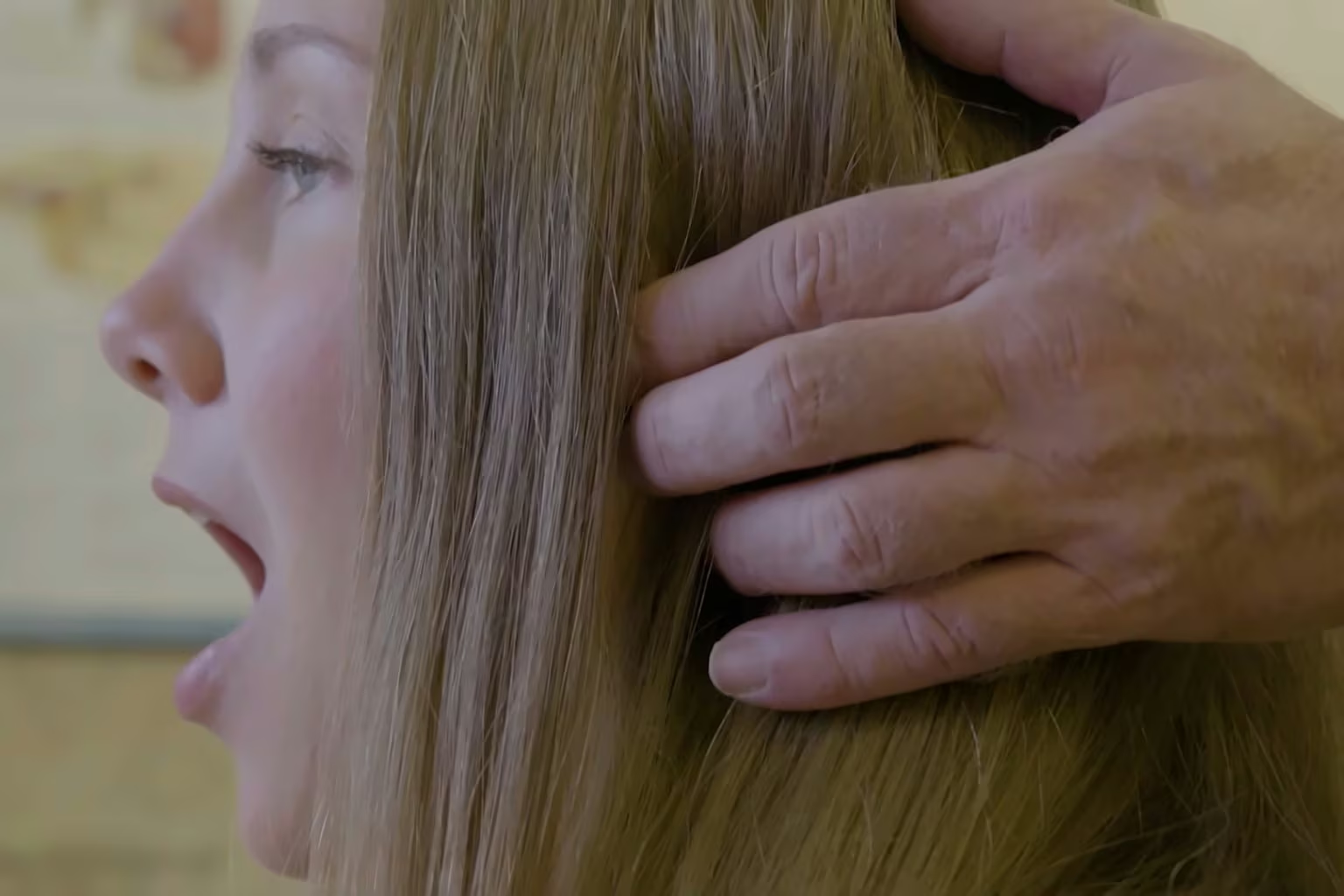
The jaw joint sits just in front of the ear, so jaw pain and muscle tension are often felt in and around the ear. That is one reason jaw problems and ear symptoms can show up together and are worth evaluating side by side.
Signs, Causes & Care
Signs • Causes • How We Evaluate and Treat
Signs You May Notice
Meniere’s-related jaw symptoms often follow a pattern.
Signs to watch for
- Vertigo and balance issues
- Ear fullness or pressure
- Tinnitus (ringing in the ears)
- Fluctuating hearing loss
- Jaw pain and tightness
See your physician first if: sudden hearing loss, vertigo lasting hours, new symptoms after age 50.
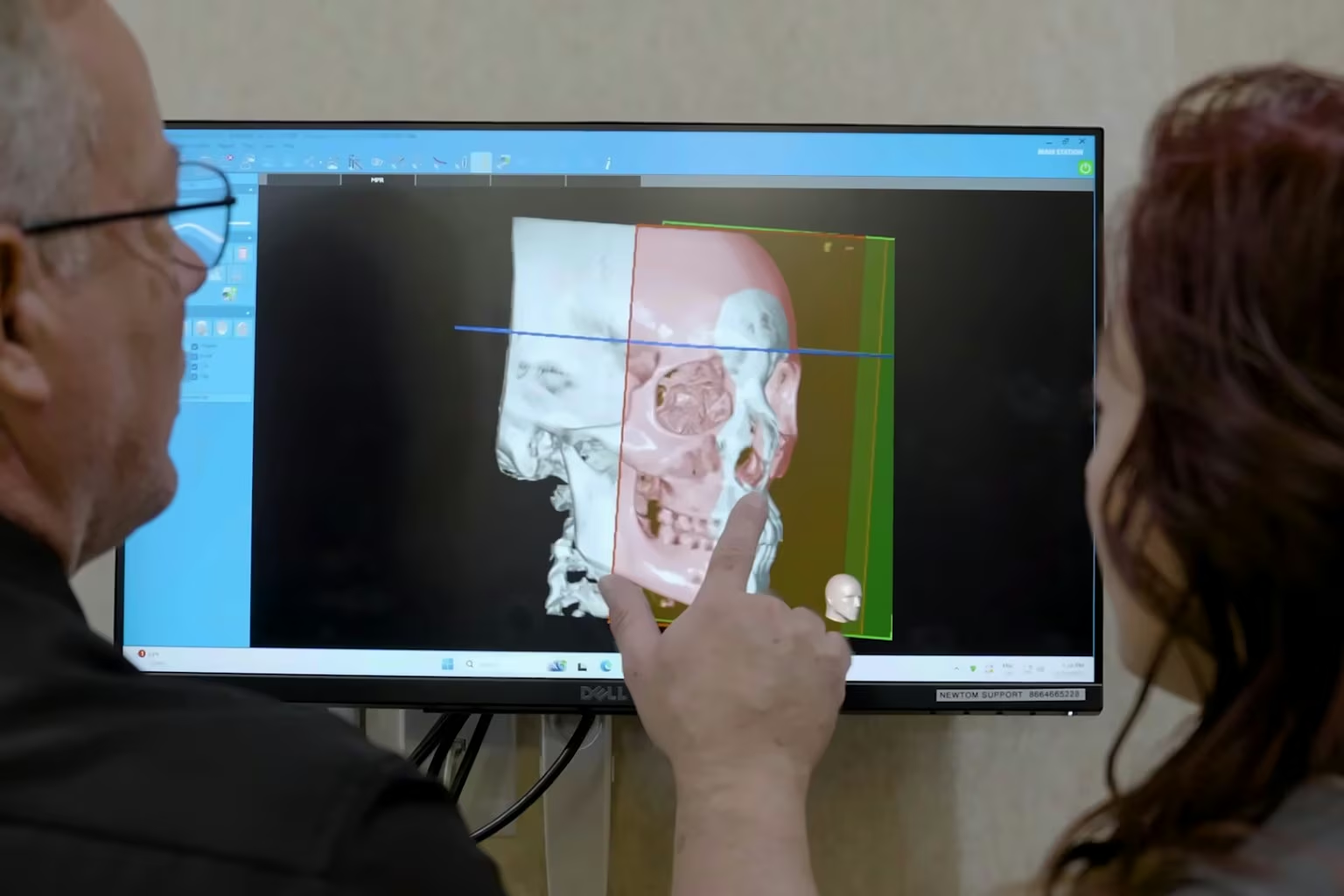
How the Jaw May Be a Factor
Jaw joint and muscle problems can coexist with Meniere’s disease and add to discomfort around the ear and jaw.
What we look for
- TMJ dysfunction near the ear
- Muscle tension
- Clenching
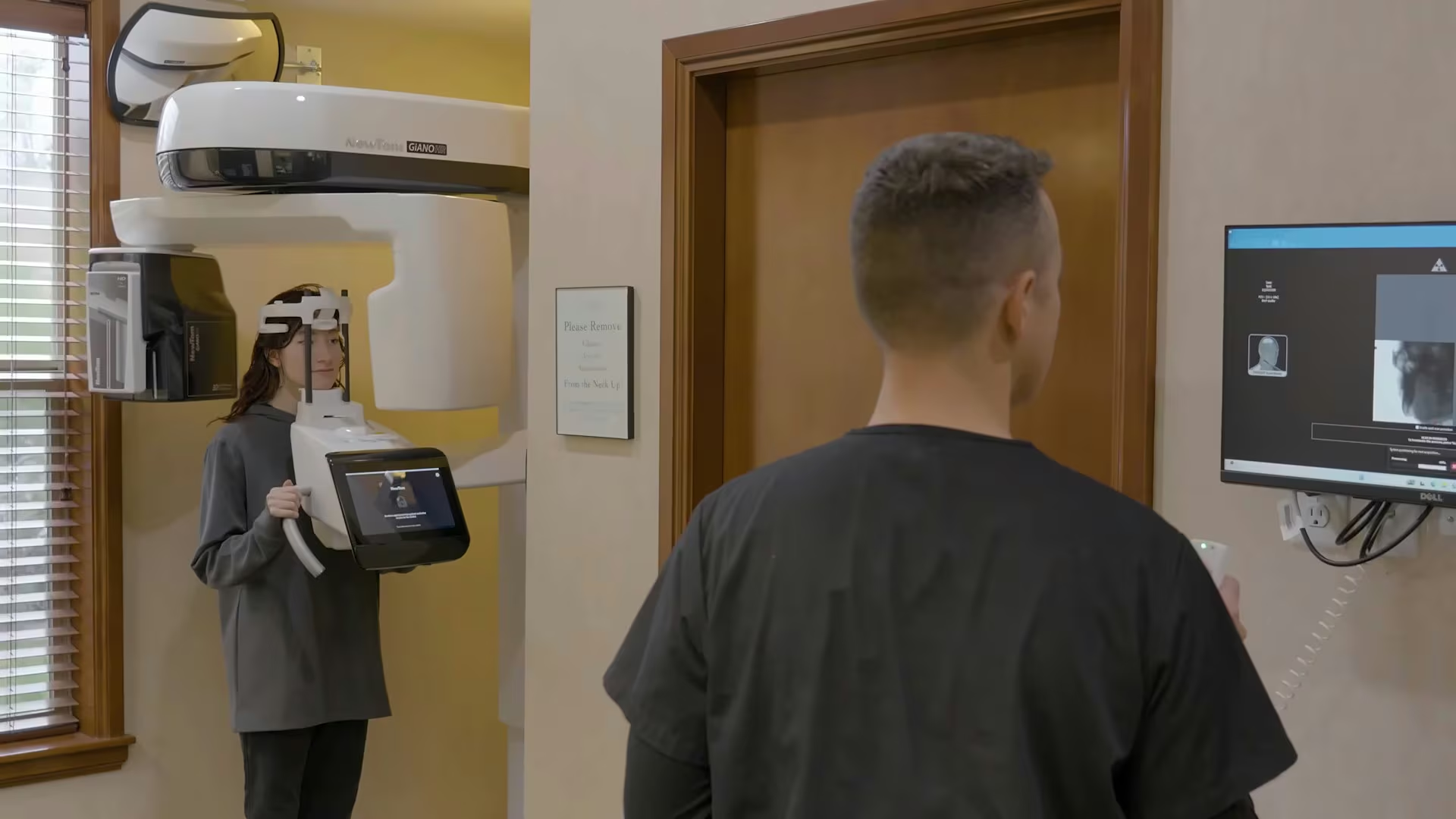
What we check: joint position, muscle palpation, bite, ear-related jaw movements.
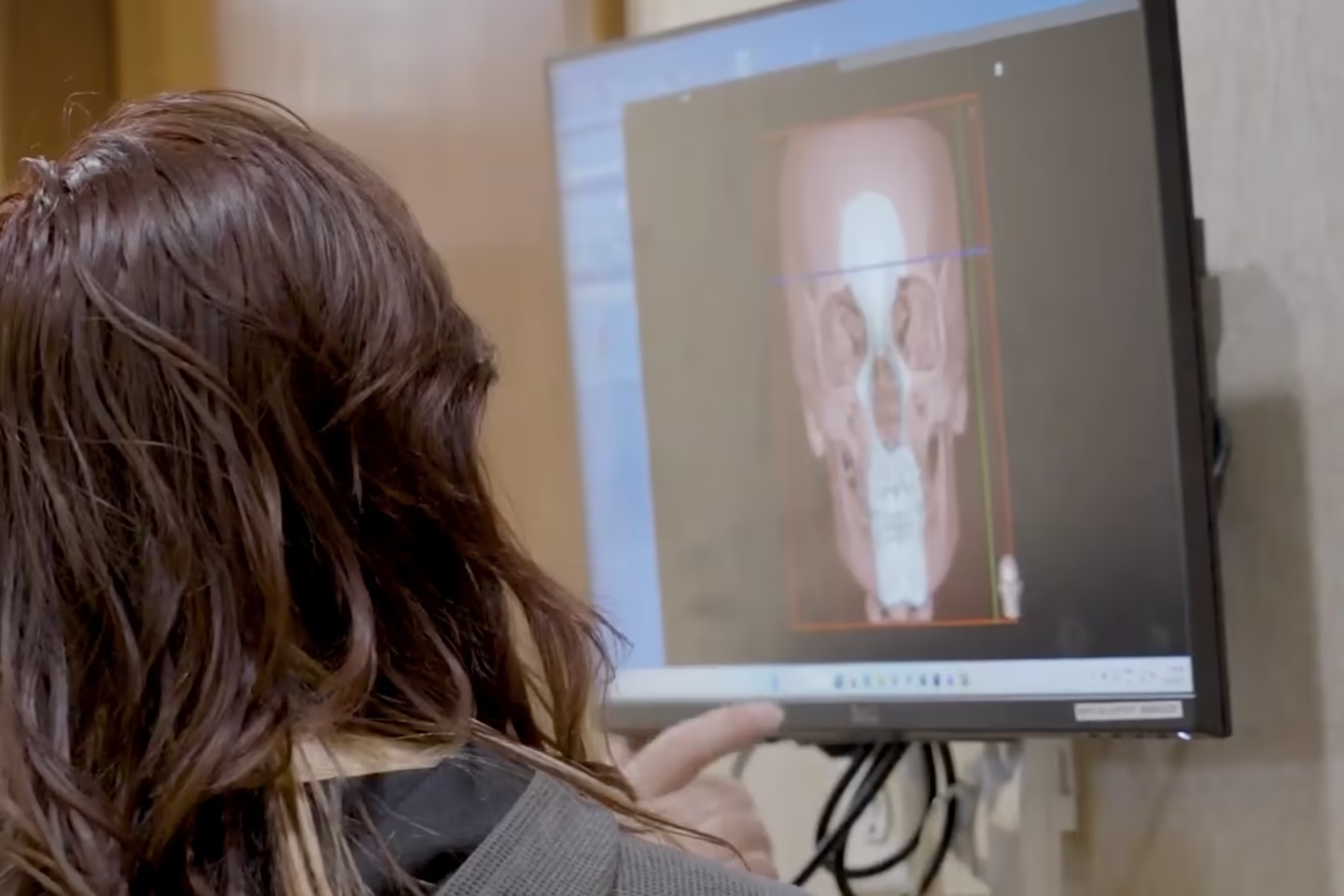
How We Evaluate and Treat It
Once we know what is contributing, treatment targets the joint and the muscles around it.
How we treat it
- Custom oral appliances
- Therapeutic exercises
- Muscle-tension therapy
- Coordination with your ENT
We coordinate care: We do not diagnose or treat Meniere’s disease itself — we evaluate the jaw-joint contribution and coordinate with your ENT. Related: Tinnitus
Ready When You Are
When the Room Spins, Check the Jaw Too
We do not replace your ENT — we evaluate and treat jaw dysfunction that may be present alongside Meniere’s, and we coordinate with your ENT. Call (385) 446-4947 to book an evaluation.
Request an Evaluation
Common Questions
Frequently Asked Questions About Meniere’s Disease and TMJ
TMJ dysfunction doesn’t cause Meniere’s disease. For some patients, jaw joint or muscle problems exist alongside it and add to discomfort around the ear and jaw. If you have dizziness, ear ringing, or imbalance together with jaw pain, see your ENT; an evaluation here can determine whether there is jaw dysfunction that should also be treated.
At TMJ and Sleep Therapy Centre of Utah, our care focuses on coexisting TMJ dysfunction. We use non-surgical therapies — such as custom oral appliances, therapeutic exercises, and muscle-relaxation techniques — to address jaw-related pain and strain, and we coordinate with your ENT, who manages the Meniere’s itself.
Our Payson clinic evaluates and treats jaw dysfunction in patients who also have Meniere’s-related symptoms, working alongside your ENT.
No — Meniere’s disease is diagnosed and managed by a physician or ENT. What we offer is a non-surgical, drug-free evaluation of whether jaw dysfunction is contributing to your symptoms. It complements, not replaces, ENT care.
If You Are Not Sure Yet
Take a symptom assessment
A few minutes of questions to help you describe what you are experiencing. It is not a diagnosis; it gives us somewhere to begin.
Jaw, face or head pain
Jaw pain, headaches, or clicking when you chew may point to a TMJ disorder, or to something that interacts with it.TMJ Symptom Assessment
Snoring, fatigue or broken sleep
Snoring, gasping for air, or waking unrefreshed can be signs of a sleep-related breathing problem.Sleep Symptom Assessment