

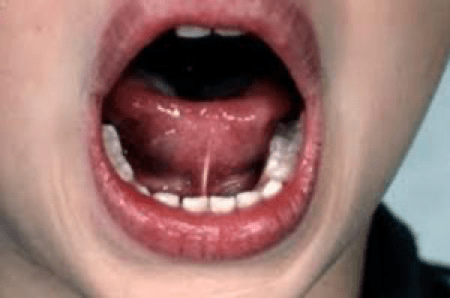
Children may have unclear speech, difficulty swallowing, or chronic mouth breathing. An evaluation can confirm tongue tie.
Children & Development • Tongue Tie
Tongue Tie Evaluation and Treatment
A tight band under the tongue (ankyloglossia) can affect speech and swallowing in children, and breathing and jaw function at any age. We evaluate how the tongue actually works before deciding whether a release is needed.

Tongue Tie Evaluation
What Tongue Tie Affects
Tongue tie (ankyloglossia) is a restricted lingual frenulum that limits tongue mobility, which can affect feeding, speech and airway development in children. Beyond infancy it has been associated with altered oral posture and a smaller airway, as a National Library of Medicine review summarizes.
We evaluate children and adults whose symptoms point to tongue restriction — how it affects feeding, speech, airway health and jaw function — and provide evaluation and, where a release is indicated, treatment or referral.
How It Works
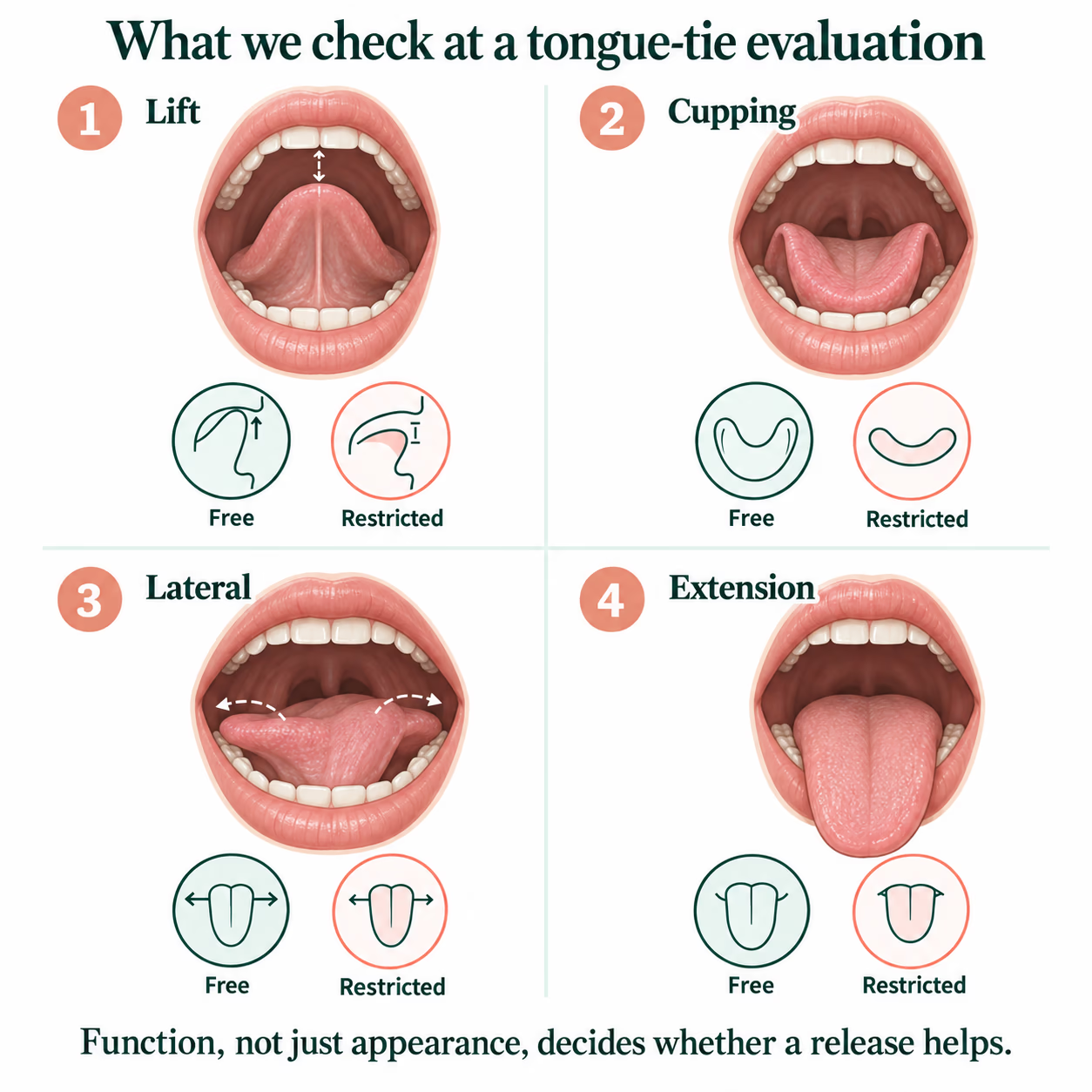
What We Check at a Tongue-Tie Evaluation
Function, not just appearance, decides whether a release helps.
- Lift — can the tongue tip reach the palate?
- Cupping — do the edges curl up around food?
- Lateral movement — can the tip reach each corner of the mouth?
- Extension — can the tip clear the lower lip?
Tongue Function by Age
Children • Adults

Children
As children grow, a restricted tongue can show up in speech, breathing and eating.
Signs to watch for
- Unclear speech
- Mouth breathing
- Picky or slow eating
- Snoring
Goal: clear speech, nasal breathing, normal jaw growth.
Adults
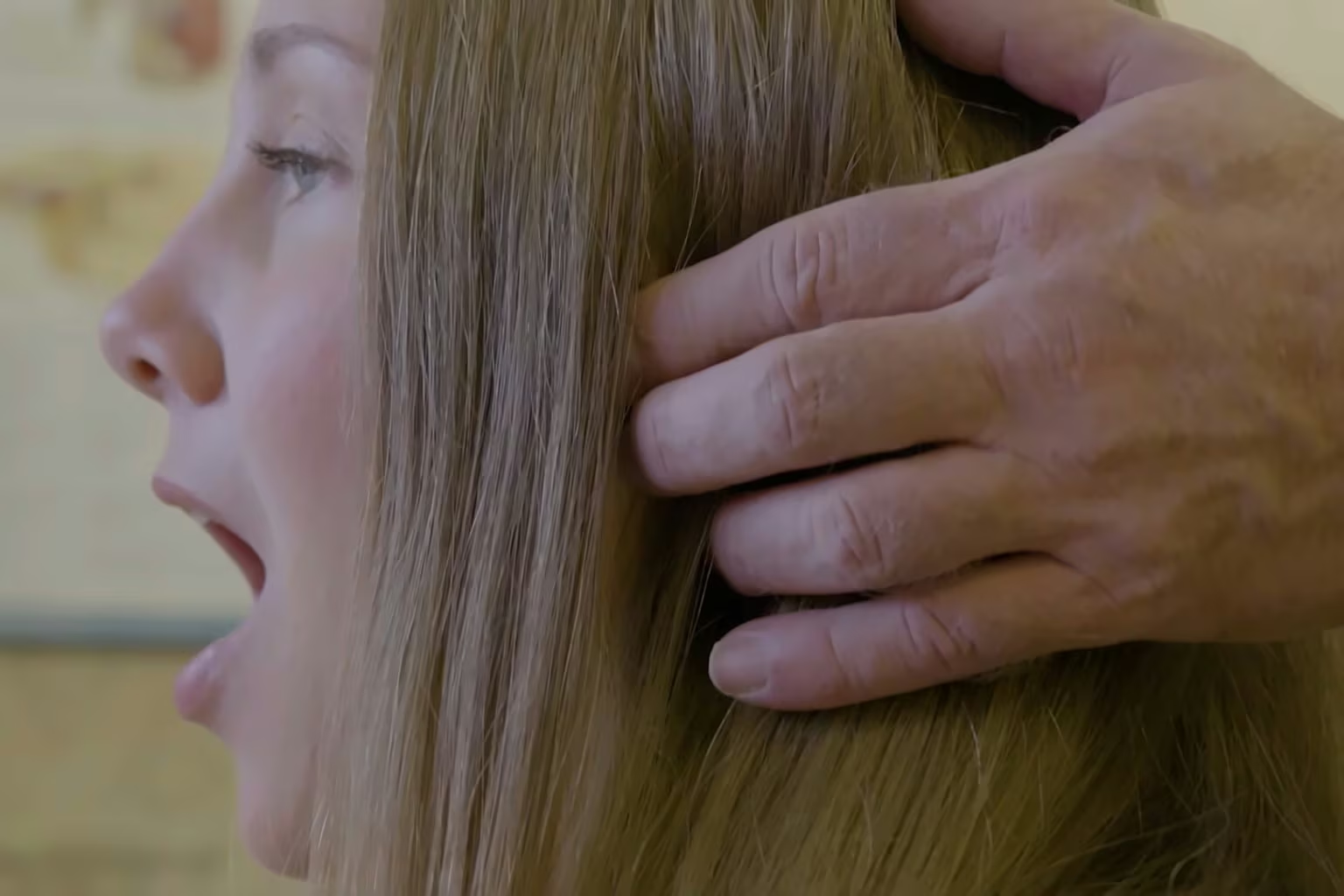
Tongue restriction does not always resolve on its own, and some adults carry it into jaw and sleep symptoms.
Signs to watch for
- Jaw tension
- Neck tension
- Headaches
- Poor sleep
Goal: relieve strain on the TMJ, support airway function.
Ready When You Are
Schedule A Tongue Tie Evaluation
Call (385) 446-4947 to schedule a tongue tie evaluation. We will look at how tongue mobility may be affecting feeding, speech, breathing, and jaw function before anything else is decided.
Call (385) 446-4947Call Now
Common Questions
Frequently Asked Questions About Tongue Tie
Tongue tie itself is not painful, but it can make eating, chewing, and speaking frustrating. When a release is indicated, the procedure is typically quick and well tolerated.
Sometimes. Many children benefit from speech or myofunctional therapy after a release to help retrain tongue posture, improve articulation, and support the results of treatment.
Yes. Restricted tongue movement can contribute to mouth breathing, poor airway development, and sleep-disordered breathing. Addressing the tie, where indicated, may improve sleep and breathing patterns for some children.
Untreated tongue tie may contribute to long-term challenges with feeding, speech, airway growth, and oral development. Early evaluation lets us catch and address these issues before they become harder to manage.