

Airway orthodontics focuses on the relationship between jaw development, facial growth, and healthy breathing. Unlike traditional orthodontics that mainly addresses teeth alignment, airway and orthodontics work together to support healthy airway function, which may help reduce sleep issues and mouth breathing, and support long-term health.
Airway & Facial Development • Payson, Utah
Airway Orthodontics
Airway orthodontics focuses on jaw alignment and breathing, an approach that may help reduce the risk of sleep-disordered breathing, jaw joint issues (TMD), and related developmental concerns. We offer personalized orthodontic solutions to support healthy growth and long-term wellness.

Airway Orthodontics in Payson
Improving Breathing and Jaw Alignment
Airway orthodontics works to improve jaw alignment and expand the airway, with the goal of supporting better breathing, sleep and overall health together. Unlike traditional orthodontics, it looks at contributing factors behind sleep-disordered breathing, TMJ dysfunction and facial-development concerns — for children and adults.
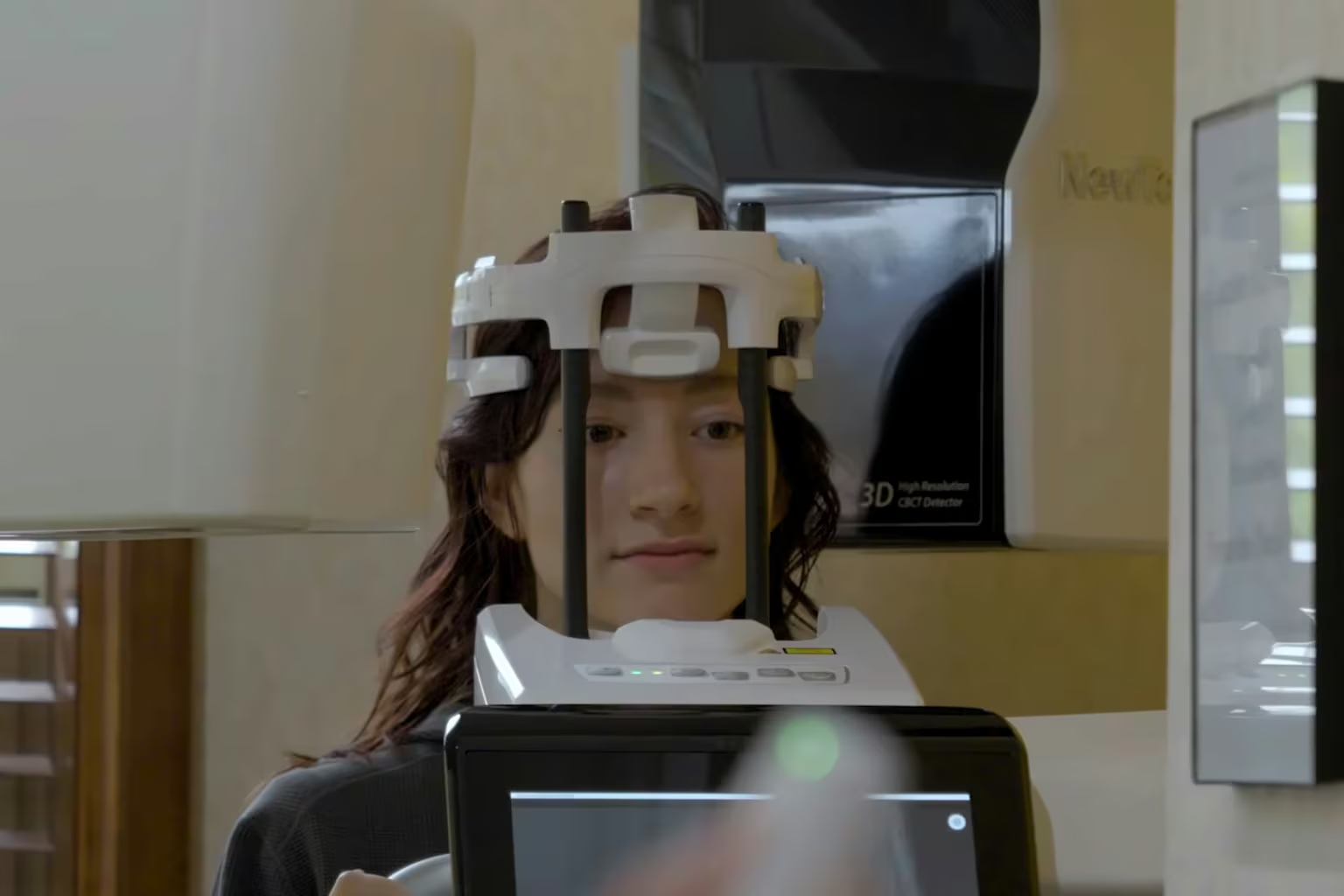
An airway orthodontist starts with how you breathe — awake and asleep — and works back to the jaw, the bite and how the face has grown. Teeth still get straighter; they are just not the only thing being corrected.
Where This Connects
Related Care
Myobrace® for Children
Guided appliance therapy that helps a growing jaw develop properly.
Myofunctional Therapy for Children
Exercises that build nasal breathing and healthy tongue posture.
Tongue Tie Evaluation and Treatment
Evaluation and release for a tongue tie limiting function.
Pediatrics
Growth-focused care for children’s jaws, breathing and bite.
How We Treat
Children • Adults
Airway-Focused Care for Children
While the face is still growing, we can guide it.
How We Guide Growth
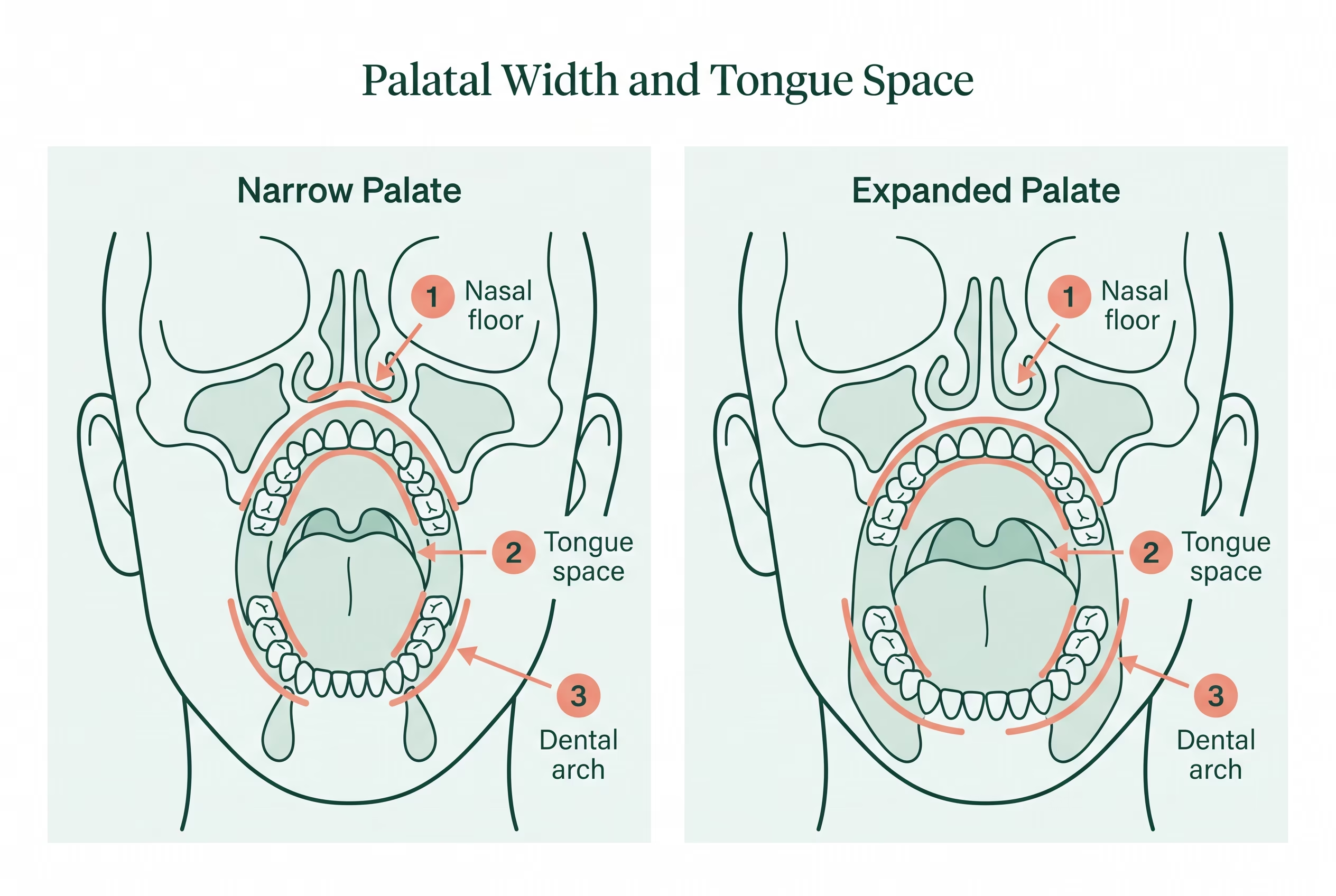
- Palatal expansion to create room for the tongue and airway
- Myobrace and other guided-growth appliances
- Myofunctional therapy to build nasal breathing and tongue posture
- Coordination with an ENT for tonsils and adenoids when needed
Signs in a Growing Child: mouth breathing, day or night, snoring, a narrow arch or crowded teeth, a long, narrow pattern of facial growth, bed-wetting or trouble focusing.
Airway-Focused Care for Adults
Growth is finished, but the airway can still be given room.
How We Give the Airway Room
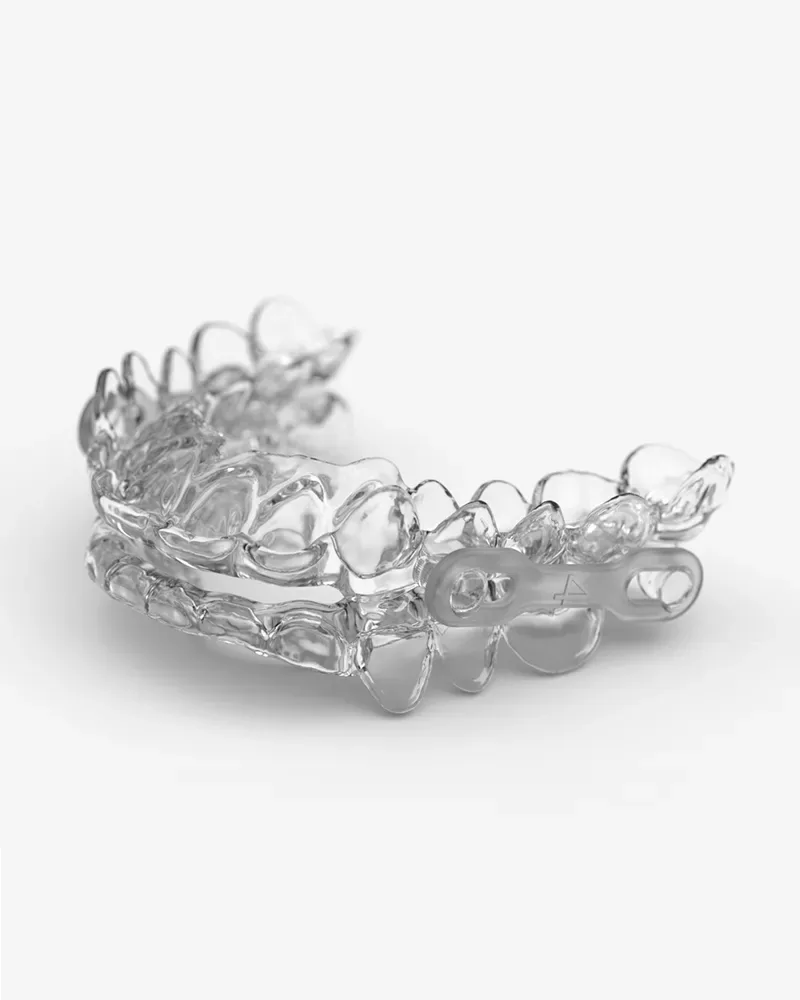
- Arch development with custom appliances
- Oral appliance therapy for sleep-disordered breathing
- Myofunctional therapy to retrain tongue and airway function
- TMJ co-management when the joint is also involved
Signs in Adults: snoring or diagnosed sleep apnea, frequent headaches and jaw pain, clenching and grinding, daytime fatigue.
How It Works
Narrow palate vs. expanded palate
A narrow palate crowds the tongue and airway; palatal expansion creates room for both.
What to Expect
How an evaluation works
Three steps, in order. Nothing is recommended until the first two are done.
Request an evaluation
Tell us what you are experiencing, in your own words. Call, text or send a message and we will arrange a time.
A comprehensive assessment
We examine the jaw, muscles, airway, sleep and oral function together and review your history.
A plan built on the findings
We explain what we found and what is contributing, then recommend care that fits it.
Ready When You Are
Airway Care Starts With a Look at How You Breathe
Request an evaluation or call (385) 446-4947, and we will start where every airway orthodontic plan starts — with a look at how you breathe.
Common Questions
Frequently Asked Questions About Airway Orthodontics in Utah
Children and adults who snore, breathe through the mouth, grind their teeth, or experience sleep-disordered breathing may benefit from airway orthodontic care. An evaluation at our Utah office can determine if your symptoms are related to underdeveloped jaws or a compromised airway.
TMJ and Sleep Therapy Centre of Utah provides airway-focused orthodontic care designed to treat both structural and functional airway problems, for children and adults. Our team takes a holistic approach aimed at improving breathing, posture and long-term health.
Airway and orthodontics work together to support proper jaw positioning and nasal breathing, which may help reduce risk factors linked to conditions like sleep apnea. This integrated approach aims to improve oral function and support long-term wellness by looking at what may be driving the symptoms, not only the symptoms themselves.
If You Are Not Sure Yet
Take a symptom assessment
A few minutes of questions to help you describe what you are experiencing. It is not a diagnosis; it gives us somewhere to begin.
Jaw, face or head pain
Jaw pain, headaches, or clicking when you chew may point to a TMJ disorder, or to something that interacts with it.TMJ Symptom Assessment
Snoring, fatigue or broken sleep
Snoring, gasping for air, or waking unrefreshed can be signs of a sleep-related breathing problem.Sleep Symptom Assessment