

Common signs include jaw pain or tenderness, clicking or popping when you chew, frequent headaches, and jaw locking. This assessment can help you recognize the pattern, but only a provider can confirm a diagnosis after an evaluation.
TMJ Symptom Assessment
Jaw Pain, Headaches, or Clicking When You Chew?
If you are dealing with persistent jaw pain, frequent headaches, or a popping jaw, this quick self-assessment can help you better understand whether a TMJ disorder may be worth discussing with a provider in Payson, Utah.
Start the assessment
Takes 1-2 minutes.
We will never share your information. This form is fully HIPAA Compliant.

At a Glance
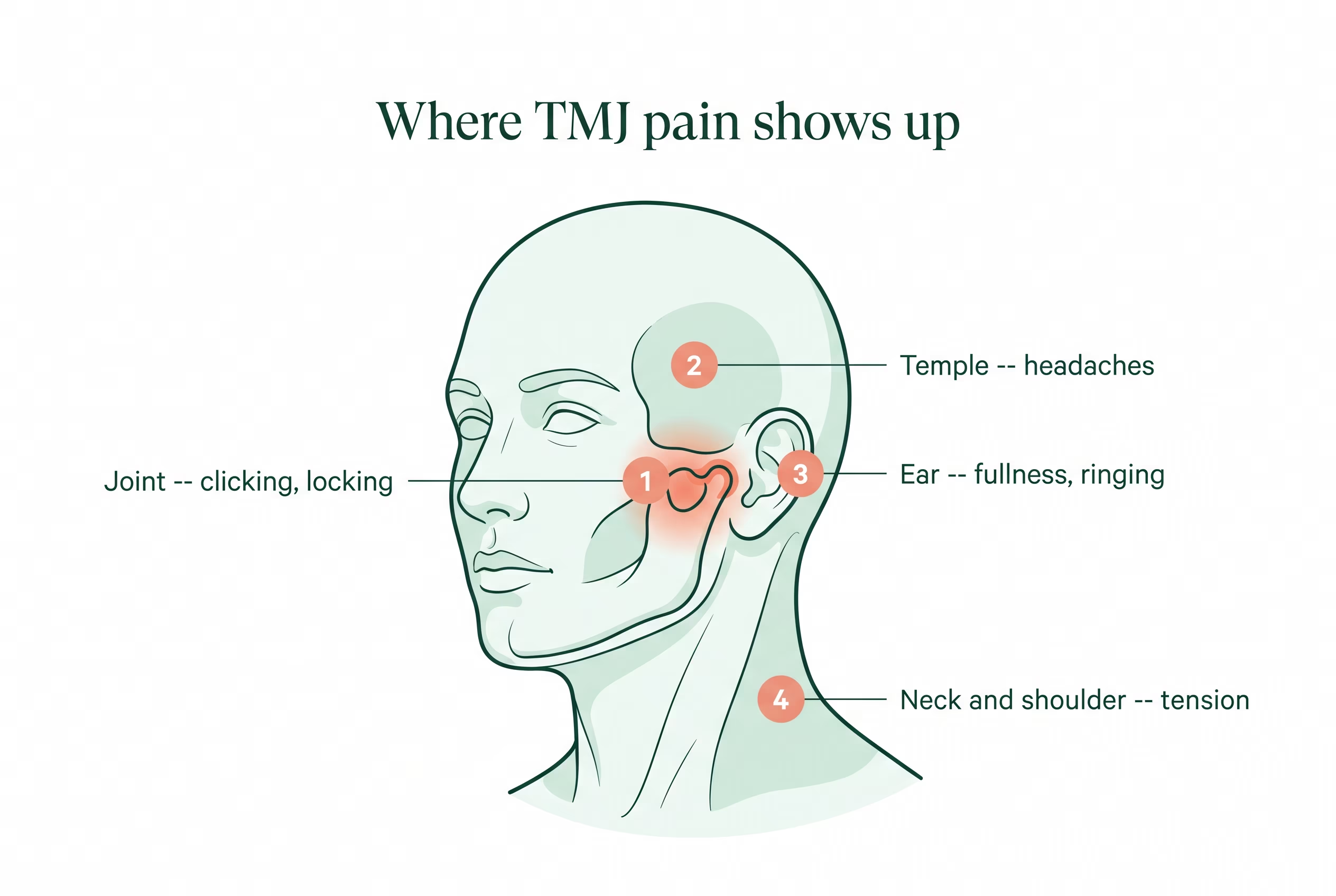
Where TMJ Pain Shows Up
TMJ pain can show up as joint clicking, temple headaches, ear fullness, or neck and shoulder tension.
Screening, Not A Diagnosis
What This Assessment Does and Does Not Tell You
This assessment is not a diagnosis. It is a short screening tool that helps you recognize the pattern behind your jaw pain, headaches, or clicking — in a couple of minutes, with your answers kept private.
If your answers point to something worth looking at, the next step is a proper evaluation with a provider who can confirm what’s happening. Read more about TMJ pain and how we treat it.
Payson, Utah
We Look Forward To Meeting You
An assessment is a starting point, not an answer. If it points to something worth looking at, the next step is a comprehensive evaluation of jaw, muscle, airway, sleep and oral function together before recommending anything.
Request an Evaluation
Common Questions
TMJ and Jaw Pain FAQs
TMJ disorders are often treated by trained providers using non-surgical approaches such as custom oral appliances and targeted therapy. Our team in Payson specializes in comfortable, conservative care for both adults and children.
No. This assessment is a screening tool, not a diagnosis. It helps you understand whether your symptoms are worth discussing with a provider, who can then recommend a proper evaluation if needed.
We verify your insurance benefits and help you file claims for the reimbursement you’re entitled to. What’s covered depends on your diagnosis and your plan, so we’ll walk you through your specific options at your evaluation.