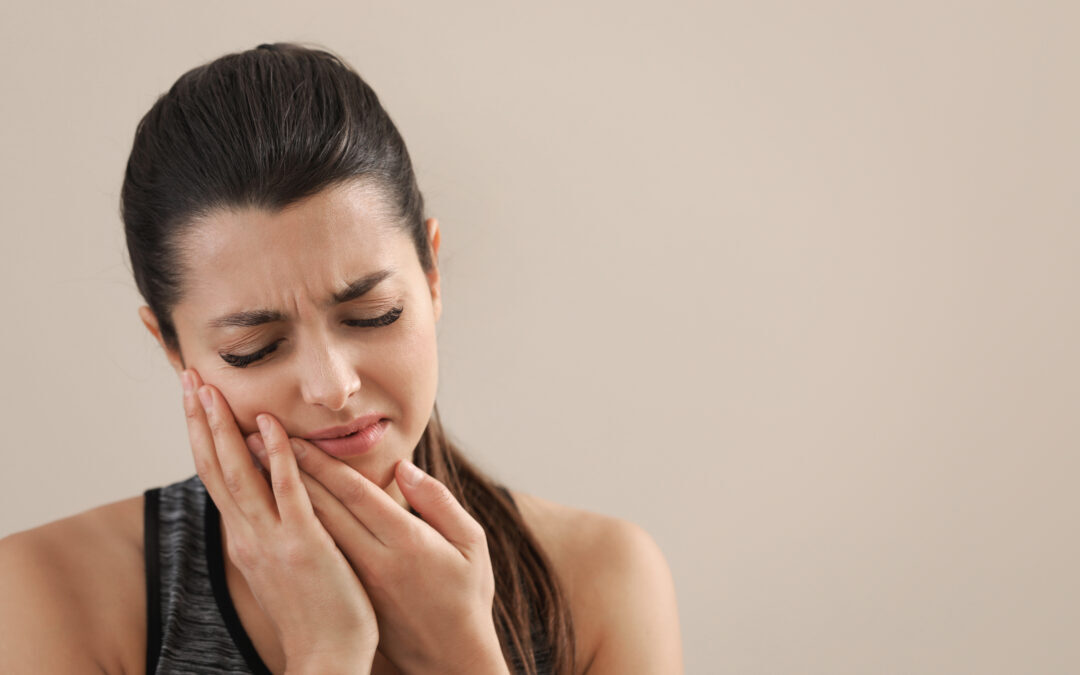
Pain in your jaw might be an easy thing to shrug off throughout the day, but at some point, you have to chew, talk, or yawn.
Many people simply live with the pain, sometimes for months on end. In fact, roughly ten million Americans live with jaw pain, with only half to two-thirds eventually seeking treatment.
The source isn’t singular either. It can come from the jaw muscles, the temporomandibular joint, teeth, gum disease, misaligned teeth, sinus problems, or a past jaw injury. It often shows up as a mix of smaller warning signs, rather than a strong, overwhelming symptom.
If you have headaches, ear pressure, neck tightness, or bite changes along with jaw discomfort, temporomandibular disorders (otherwise known as TMJ or TMD disorders) could be a part of the picture. Jaw pain in the upper jaw, lower jaw, or both sides can be one of the most telling signs that something is off.
Of course, symptoms don’t always speak our language, informing us of the problem, its source, and what needs to be done.
This guide will walk you through nine commonly overlooked TMJ-related symptoms, simple self-checks you can try at home, and when it’s time to ask a healthcare provider about how to get rid of jaw pain or how to relieve jaw tension in a more targeted way.
Quick Context: What TMJ Actually Means and Why It Affects More Than the Jaw
Temporomandibular joint disorders are a group of conditions that cause problems in the jaw joint and the muscles that control jaw movement. The temporomandibular joint itself is a small hinge in the front of each ear, but TMJ disorders also involve the jaw muscles, ligaments, and bite mechanics that help you chew, speak, and yawn.
When you clench or start grinding your teeth, those muscles and joints can become overloaded, leading to local jaw pain, jaw tenderness, or general jaw discomfort that sometimes spreads into the face, head, or neck.
Over time, the repeated strain may cause other jaw issues, like stiffness, clicking, or difficulty chewing, even if the only symptom you notice in the beginning is an aching jaw at the end of a long day. Symptoms often ebb and flow with stress, sleep quality, posture, and other health factors. Chronic jaw pain, in particular, tends to worsen without the right support.
The Listicle: 9 TMJ Symptoms Most People Miss
You do not need every symptom in this list for TMJ disorders to be applicable. Instead, think about it in terms of patterns:
- When do symptoms show up? In the mornings, after work, after chewing gum, or during stressful weeks?
- Are the symptoms on one side of the jaw or the other?
- Are they happening more often or getting more intense over time?
Keeping brief notes for one to two weeks can make it much easier to connect the dots. If you notice a recurring pattern of pain in your jaw, tension, or related symptoms, that’s a good time to ask whether or not TMJ disorders might be contributing and what treatment options are available.
Symptom 1: Jaw Clicking, Popping, or Grinding Sounds That Come and Go
Occasional jaw noises can be relatively harmless. However, repeated clicking and/or popping in one jaw joint may be a sign that the disc of soft tissues inside the temporomandibular joint is not moving smoothly anymore. Some people notice a click when they open wide at the dentist, bite into a burger, or yawn. Also, there might not be any pain when the clicking first begins.
Unfortunately, that lack of pain rarely lasts. The click you’re hearing may eventually be joined by soreness, stiffness, or a feeling like the jaw has to “jump over” a spot as it opens and closes. A simple self-check:
- Does the click happen mostly on one side?
- Is it more noticeable under stress, when you are tired, or after a lot of talking or chewing?
It’s a good idea to ask about jaw clicking treatment if the sounds are frequent, if they are accompanied by pain, or if you feel like you can’t open as wide as you used to. Any jaw pain that comes with the clicking is a particularly important signal to pay attention to.
Symptom 2: Morning Jaw Soreness or Tightness, Even if You Feel Yourself Clenching
Waking up with tired, tight jaw muscles is one of the most common symptoms of jaw clenching, even if you never notice yourself grinding your teeth at night. Jaw muscles can work hard while you sleep, especially during periods of stress, and you may only notice it if:
- Morning jaw soreness or fatigue.
- Dull headaches when you wake up.
- Tooth sensitivity or a “bruised” feeling in certain teeth.
Sometimes, people feel a bit better later in the day, only to tighten up again when night rolls around. If this cycle is repetitive, it’s worth asking about how to relieve your jaw tension and how to get rid of jaw pain that’s linked to your nighttime habits.
Symptom 3: Limited Jaw Opening or a Jaw That Feels “Stuck” at Times
Lock jaw symptoms don’t always look like a fully locked mouth. Sometimes, it feels more like your jaw hesitates, resists, or even shifts as you open. Some of the symptoms you may notice include:
- Difficulty taking a bite out of a sandwich.
- A hitch when yawning or opening wide at the dentist.
- A sense that your jaw might “catch” if you push it too far
Limited jaw opening can come from muscle guarding, joint inflammation, or disc position changes inside the temporomandibular joint. Try to comfortably fit two to three finger widths between your front teeth as a self-check.
If your jaw regularly feels stuck, or if you have recurring lock jaw symptoms, it’s important to discuss this information with a provider before the problem becomes much worse. Jaw pain and limited range of motion often go hand in hand, and catching both early makes a real difference.
Symptom 4: Pain Near the Ear, Ringing, Fullness, or Pressure with a Normal Ear Exam
Because the jaw joint sits directly in front of the ear canal, TMJ issues sometimes feel like an ear issue. People report some of the following symptoms:
- Ear fullness or pressure that worsens after chewing or clenching.
- Aching around the ear with a normal ear exam.
- Occasional ringing or sensitivity near the joint.
Jaw muscles can also refer pain into the ear area, making it difficult to tell whether the problem is ear-related or jaw-related. A simple self-check is to gently press along the jaw muscles near the cheek and temple. If the pressure creates ear pain, TMJ disorders may be part of the jaw pain pattern.
Repeated normal ear checkups plus ongoing pressure or pain near the ear are good reasons to consider a TMJ-focused evaluation. Jaw pain that mimics ear symptoms is often traced back to the joint once other causes are ruled out.
Symptom 5: Headaches in the Temples or Behind the Eyes That Track with Jaw Tension
Jaw muscles don’t work alone, isolated from everything else. Temporalis muscles, along the side of the head, help control jaw movement and can become overworked as well, especially with clenching and grinding. This can lead to several symptoms as well.
- Temple headaches that flare during a stressful day.
- Pain behind the eyes after driving, concentrating, or chewing gum.
- Headaches that seem to ease off when you consciously relax your jaw.
These headaches can overlap with migraines or cluster headaches, so it’s important not to blame every headache on TMJ disorders or associate them with jaw pain in general.
However, if you notice a clear connection between jaw pain or tension and head pain, TMJ care may be one helpful part of a broader plan to find relief and reduce painful headaches over time. Treating the source of jaw pain, rather than just the headaches, is often what makes the biggest impact.
Symptom 6: Facial Pain That Feels Like Tooth Pain, But Dental Work Doesn’t Fix It
Referred pain is common with TMJ disorders. The brain can interpret muscle or joint pain as coming from nearby teeth or sinuses, and people sometimes describe it as:
- A toothache that feels like it’s moving from one tooth to another.
- Facial pain or pressure that mimics sinus issues.
- Ongoing sensitivity even after dental problems have been treated.
Trigger points in jaw muscles and ligaments can create jaw pain that feels more like classic toothaches, even when dental X-rays and exams all look completely fine. A useful self-check is to gently massage along the jaw muscles; if the pain changes or travels, it may be a muscle-related jaw pain scenario instead of an isolated toothache.
If dental work doesn’t resolve the discomfort, coordinating between your dentist and a TMJ provider will help you identify the root cause and avoid unnecessary procedures. Getting a proper jaw pain treatment plan in place early can save you time, money, and a lot of unnecessary guessing.
Symptom 7: Neck and Shoulder Tightness That Flares with Jaw Symptoms
Jaw, neck, and shoulder muscles often work as a team, especially if you spend a lot of time in a forward head posture at a computer or driving for long periods. Clenching your jaw can create pressure up and down this chain of muscles, leading to:
- Neck pain and tight shoulders during jaw flare-ups.
- A habit of lifting the shoulders or tensing the jaw when concentrating.
- Relief that never seems to last if only the neck is treated.
If you notice that neck pain and jaw pain or discomfort flare up at the same time, it’s a suggestion that jaw clenching may be part of the pattern, or the jaw muscles in general. Short-term jaw rest strategies, posture changes, and targeted TMJ care will often work much better together than treating the neck alone.
Symptom 8: Bite Changes or a Feeling That Teeth Do Not Fit the Same
Inflammation inside the jaw joint, besides causing low to severe jaw pain, can slightly change how the joint seats, which can shift where your upper and lower jaw meet.
- You hit one side first when you close your mouth and bring your teeth together.
- You cannot find a comfortable resting bite.
- Your bite feels different from morning to evening.
These subtle changes can make jaw muscles work harder, feeding into clenching jaw symptoms and additional jaw pain. A simple self-check is to notice whether you “hunt” for a bite position at night or grind more when things feel off. Because ongoing bite changes can reinforce jaw problems, it is wise to have them evaluated instead of just ignoring them. Even mild jaw pain connected to bite shifts is worth bringing up with your provider.
Symptom 9: Jaw Tension You Cannot Relax, Even When You Try
For some people, clenching becomes so automatic that a tight jaw feels like the only normal setting. Chronic jaw clenching can turn into a learned resting posture where teeth are touching, and jaw muscles feel stiff most of the day. A healthy jaw rest position looks like the following:
- Lips together.
- Teeth slightly apart.
- Tongue resting gently on the roof of the mouth.
You can set reminders to check in during the day and notice how often your teeth are together. If basic relaxation techniques and reminders are not enough to relieve jaw pain or tension, it may be time for guided, TMJ-focused care. The goal is to retrain those patterns and protect the TMJ joint.
At-Home Self-Checks and What Helps Short-Term
While persistent or severe jaw pain should be checked by a healthcare provider, there are a few, gentle, low-risk steps that can help calm flare-ups.
- Use moist heat on the jaw muscles and avoid extreme opening or hard foods during bad days.
- Choose softer foods for a short time and limit chewing gum, chewy candy, or long periods of talking.
- Practice jaw rest posture, with lips together, teeth apart, tongue on the palate, several times per day.
- Add gentle jaw and neck stretches, paired with slow nasal breathing, to help your muscles relax.
- Track possible triggers, like long meetings, intense workouts, driving, stressful tasks, or poor sleep.
These steps won’t cure TMJ joint disorder on their own, but they can reduce discomfort, protect irritated soft tissues, and give you useful information to share at an evaluation. Think of them as a bridge between jaw pain flare-ups and longer-term care.
When to Get Evaluated and What TMJ-Focused Care May Include
It’s time to seek an evaluation if jaw pain, stiffness, or related symptoms last for more than a few weeks, keep coming back, or begin to limit your eating, sleeping, or daily activities. Red flags you should especially look out for include:
- The jaw locks frequently or gets stuck open or closed.
- A sudden, obvious bite change.
- Significant swelling, recent jaw injury, or severe pain that isn’t improving.
A TMJ-focused visit typically includes a careful exam of the jaw joints and muscles, bite assessment, and a review of clenching, grinding your teeth, posture, and sleep habits.
Treatment options may involve a custom appliance to reduce jaw clenching and protect teeth, physical therapy-style exercises, relaxation techniques, and coaching around sleep and daily habits that cause jaw pain to begin with.
The objective is to find relief, protect the joints and muscles, and address the root causes rather than treating the symptoms as they crop up. Addressing jaw pain directly (not just managing symptoms) leads to better, longer-lasting outcomes.
If Jaw Pain Keeps Coming Back, It’s Time to Seek Clarity
TMJ symptoms rarely show up as a single, dramatic sign. Far more often, they appear as patterns of jaw pain, tension, and related issues that are fairly simple to ignore. At least in the beginning.
Paying attention to the smaller warning signs early will prevent long-term temporomandibular joint disorder problems and help you find some relief sooner. The more clearly you can describe your jaw pain symptoms and patterns, the easier it is for your provider to help.
Keep simple notes about when your jaw hurts, what seems to trigger it, and any ear, head, or neck symptoms that travel with it. Take these notes to your evaluation.
Find Relief Today
If you recognize any of these TMJ symptoms, schedule a consultation with our experienced team. Relief begins with understanding the underlying cause, and we are here to help you do exactly that. The protocols we use are in lock-step with those taught by TMJ & Sleep Therapy Centre International, a global leader in TMJ and sleep therapy education.
Dentists across this network refine their skills through programs like the TMJ & Sleep Mini Residency course, supporting consistent, high-quality care for patients who are tired of living with jaw pain and are ready to find relief.