
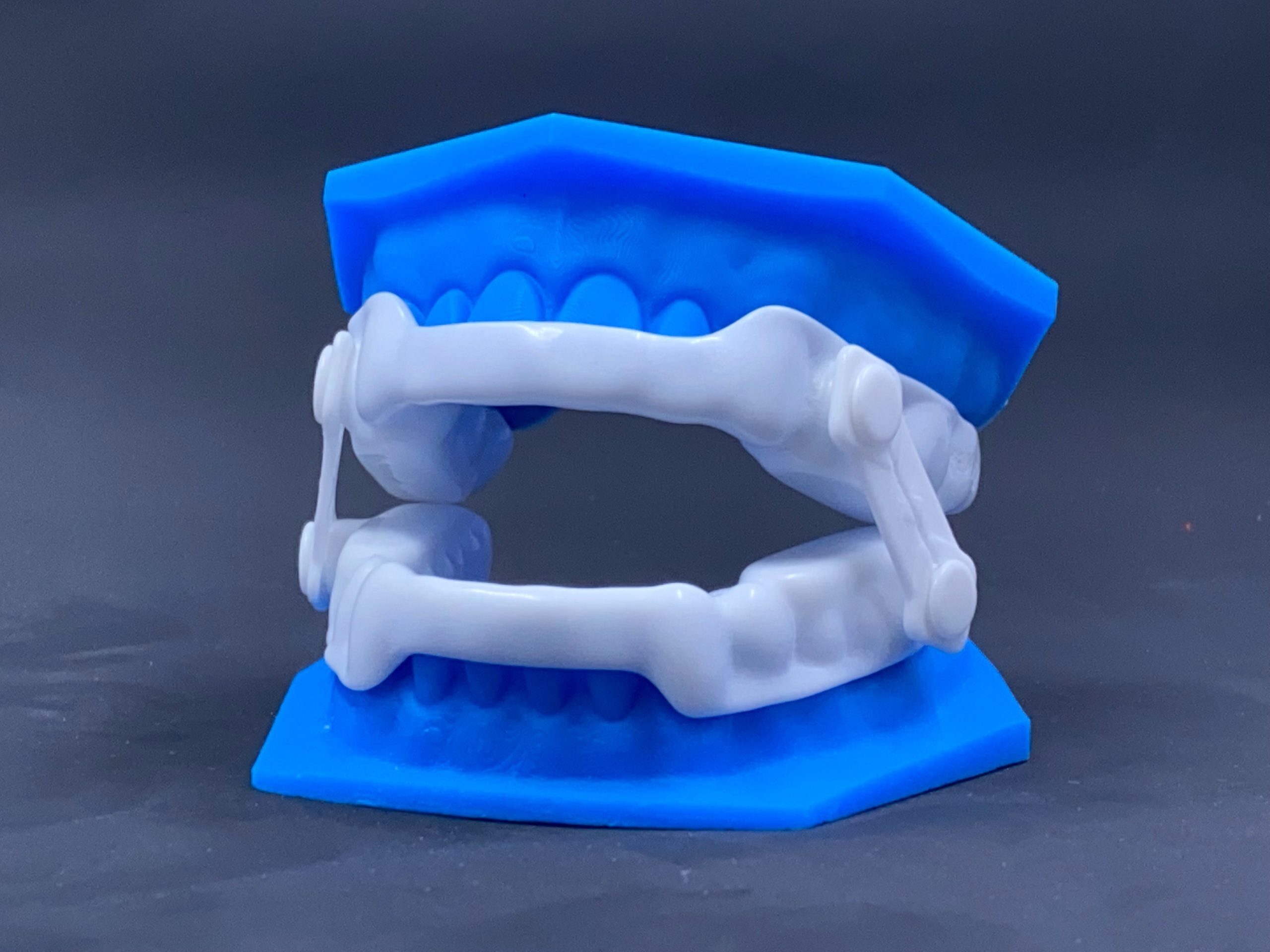
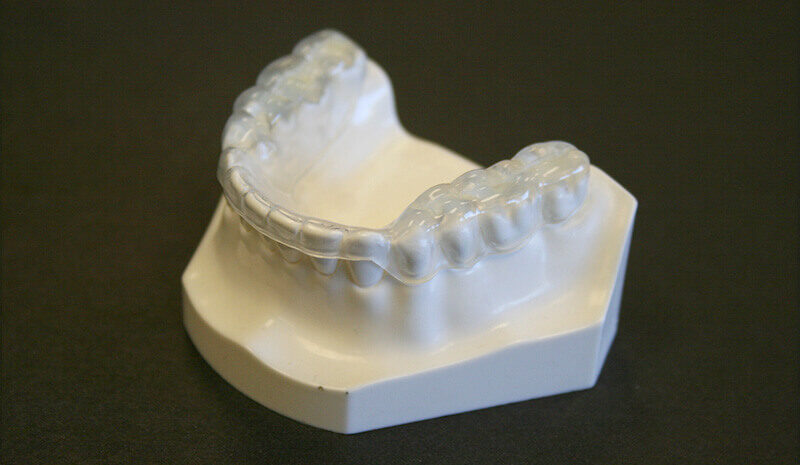
A sleep apnea appliance is a custom-made oral device designed to help support airflow during sleep. It gently repositions the jaw or tongue, which can help reduce airway obstruction and improve breathing in appropriately selected patients with obstructive sleep apnea.
Sleep & Breathing • Oral Appliance Therapy
Custom Sleep Appliances
A small custom appliance worn at night holds the lower jaw and tongue forward, which can help support airflow in appropriately selected patients. For some people with mild to moderate sleep apnea, it may serve as a physician-approved alternative to CPAP.
Sleep Appliances
How an Oral Appliance Can Help Your Airway
A sleep apnea appliance is a custom-made oral device designed to help support airflow while you sleep. It holds the lower jaw and tongue slightly forward, which can help reduce airway obstruction in appropriately selected patients. Many patients snore less and breathe more easily. For some patients with mild to moderate obstructive sleep apnea who can’t tolerate or don’t qualify for CPAP, it may serve as an alternative — determined after a physician-confirmed diagnosis and evaluation.
How It Works
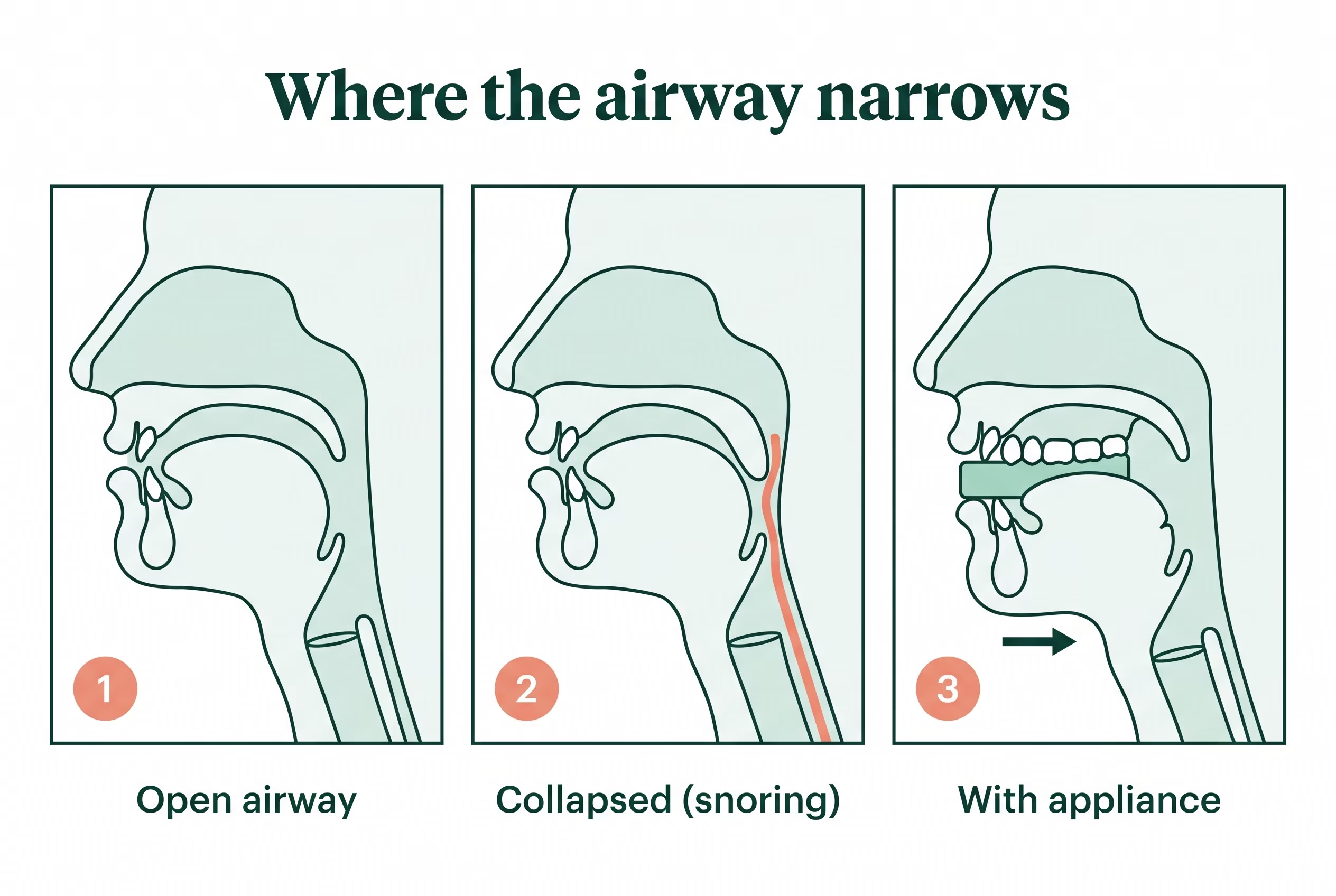
Why the airway narrows — and how an appliance can help
Open airway, collapsed (snoring) airway, and the airway held open with an oral appliance.
Two Ways to Treat Sleep Apnea
Oral Appliance • CPAP
Living With an Oral Appliance
A custom oral appliance is a small device worn over the teeth at night. It holds the lower jaw and tongue gently forward, which can help reduce airway obstruction while you sleep — no mask or machine required.
What it’s like
- Worn over the teeth, custom to your bite
- Silent — no mask, hose, or power
- Compact and easy to travel with
- Adjusted over time as your jaw settles
Good candidates: mild to moderate obstructive sleep apnea, trouble tolerating a CPAP mask, snoring confirmed by a sleep study.
Living With CPAP
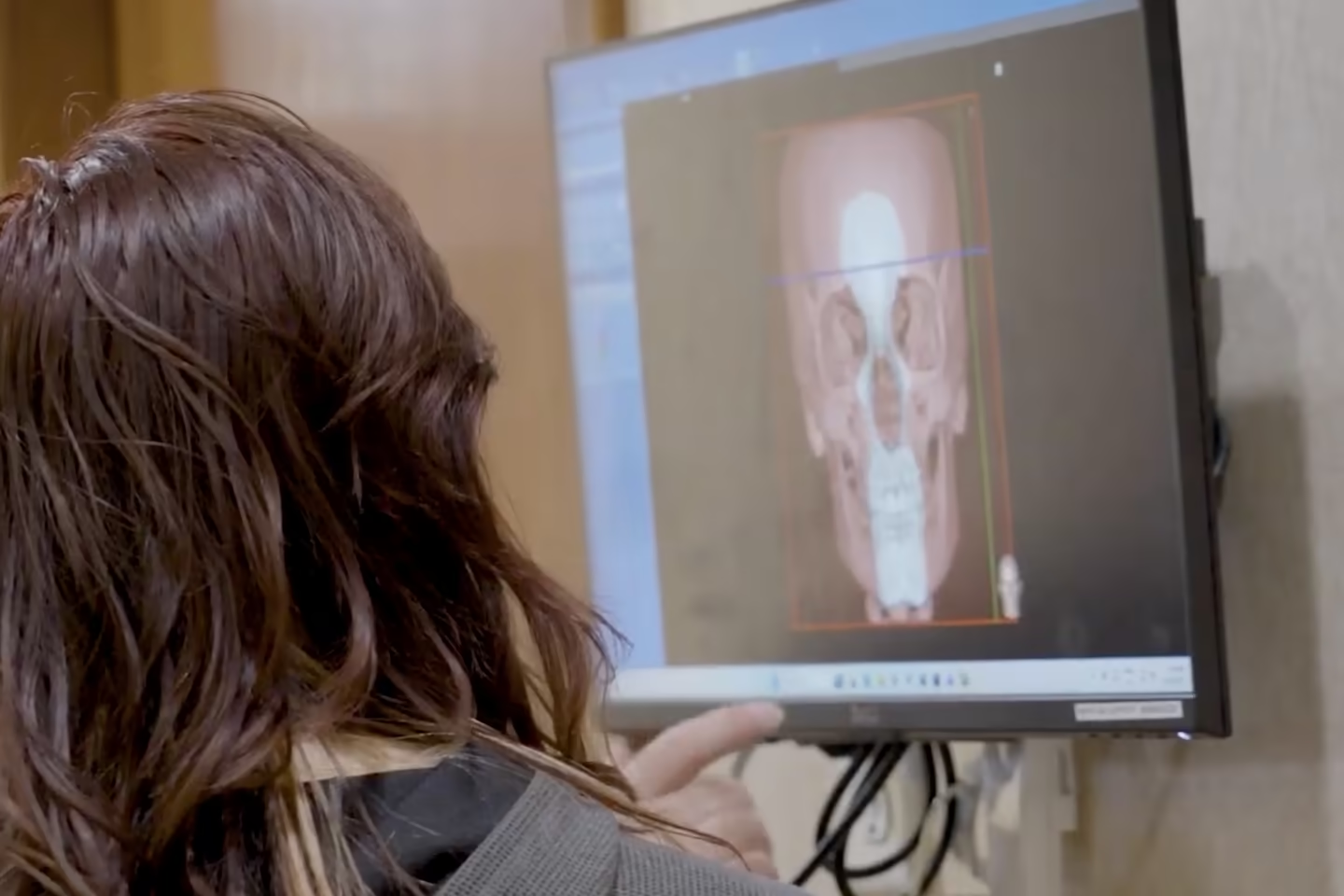
CPAP is a machine that delivers continuous air pressure through a mask to keep the airway open overnight. It is a well-established treatment, and it is often the first choice for more severe cases.
What it’s like
- Mask worn over the nose, or nose and mouth
- Machine, hose, and power source needed nightly
- Settings tuned to your sleep study
Who it suits: moderate to severe obstructive sleep apnea, care recommended by a sleep physician, we coordinate with your sleep team when CPAP is part of your plan.
Who This Helps
Conditions This Helps With
Ready When You Are
See Whether an Appliance Fits Your Airway
Bring your sleep study or let us arrange a home test. We will tell you honestly whether an oral appliance is right for your airway — and fit it if it is. Call (385) 446-4947.
Call (385) 446-4947Call Now
Common Questions
Frequently Asked Questions About Sleep Appliances
An oral sleep appliance holds the lower jaw slightly forward, which can help reduce airway obstruction during sleep in appropriately selected patients. It may reduce snoring, improve airflow, and support more restful sleep — and for some patients, reduce reliance on CPAP. Whether it is a good fit depends on your sleep study and evaluation.
An oral appliance can be a comfortable alternative to CPAP for patients who qualify, without surgery. While CPAP uses air pressure through a mask, an oral appliance is worn over the teeth. Many patients find oral appliances easier to travel with and more convenient for nightly use.
The best sleep apnea oral appliance depends on your specific airway anatomy, severity of sleep apnea, and comfort preferences. At the TMJ and Sleep Therapy Centre of Utah, we create personalized appliances that are custom-fitted for maximum effectiveness.
An oral appliance for sleep is often recommended for patients with mild to moderate obstructive sleep apnea or for those who cannot tolerate CPAP. An evaluation and sleep assessment can determine if this treatment is right for you.